The global solar industry is changing faster than ever. Production capacity is skyrocketing, N-type technologies are replacing PERC at record speed, and manufacturers are racing toward higher efficiency, lower costs, and stronger international footprints. For buyers, EPCs, distributors, and project developers, choosing the right solar module supplier in 2025 is no longer just about wattage or price—it’s about technology leadership, supply-chain stability, bankability, and long-term performance in the field.
In this global solar panels manufacturers ranking 2025, we analyze the world’s top 10 solar module manufacturers that account for over 80% of solar module shipment data 2025 – JinkoSolar, LONGi, Trina Solar, JA Solar, Canadian Solar, Qcells, First Solar, DMEGC, Tongwei, and Astronergy. These companies represent more than 80% of global module shipments and set the benchmark for next-generation solar technology.
From Jinko’s aggressive TOPCon expansion and LONGi’s back-contact breakthroughs to First Solar’s thin-film leadership, this guide compares TOPCon vs HJT vs BC technology, module efficiency comparison, and solar manufacturing capacity 2025 side-by-side.
Comparison of Top Solar Module Manufacturers
Company | Headquarters | Projected 2025 Shipments (GW) | Key Technologies | Notable Strengths |
|---|---|---|---|---|
JinkoSolar | Shangrao, China (US expansion) | 85–100 | N-type TOPCon, Tiger Neo series, perovskite tandem cells | World’s largest cumulative shipments (350+ GW); 60%+ overseas focus; record lab efficiencies (34.22% tandem); strong R&D in energy storage (6 GWh target). |
LONGi Solar | Xi’an, China | 80–90 | HPBC 2.0 back-contact (BC), HIBC cells, monocrystalline wafers | Pioneer in monocrystalline tech; 414 GW cumulative shipments; BC capacity to 50 GW; sustainability focus (net-zero by 2050); high R&D spend (5.96% of income). |
Trina Solar | Changzhou, China | 80–90 (est.) | N-type i-TOPCon, Vertex N series, perovskite/silicon tandem | 210 mm platform leadership; 205+ GW cumulative; integrated PV-storage solutions; strong ESG (TÜV LCA certified); 15.54% gross margins on modules. |
JA Solar | Beijing, China | 85–95 (est.) | N-type Bycium+ TOPCon, DeepBlue 4.0 Pro | 300 GW cumulative; 27% mass-production efficiency; financial resilience (Tier 1 S&P); global reach (178 countries); strong sustainability (ESG upgrades). |
Canadian Solar | Kitchener, Canada (global ops) | 25–27 | N-type TOPCon, HiKu series, HJT low-carbon modules | Diversified (solar + storage); 170 GW cumulative; US manufacturing (5 GW+); robust pipeline (25 GWp solar, 81 GWh storage); strong bankability (NASDAQ-listed). |
Hanwha Qcells | Seoul, South Korea (Germany/US ops) | ~15–20 (est., US-focused) | Q.ANTUM NEO, perovskite-silicon tandem, full vertical integration | Largest US crystalline silicon producer (8.4 GW capacity); record tandem efficiency; sustainability (Net Zero 2050); EPC services (12 GW Microsoft deal). |
First Solar | Tempe, Arizona, USA | 15.5–19.3 | CdTe thin-film, Series 6 modules | US manufacturing leader (14 GW by 2026); low degradation/temp coefficient; 80+ GW backlog ($20.5B); strong ESG (Global 100 Most Sustainable). |
DMEGC Solar | Dongyang, China | ~25–30 (est.) | N-type TOPCon, Infinity RT series bifacial | 50+ GW cumulative; 100% renewable energy production; top bankability (PV Tech AAA); specialized modules (hail-resistant, greenhouse); 64% YoY growth H1 2025. |
Tongwei Solar | Chengdu, China | ~35–40 (est.) | TNC/THC TOPCon/HJT, perovskite tandem | Vertical integration (420k tons polysilicon); 100 GW cumulative modules; record HJT efficiency (26.49%); global R&D (TNC 2.0 >700W); Fortune Global 500. |
Astronergy (CHINT Solar) | Haining, China (overseas plants) | ~35–40 (est.) | N-type TOPCon 5.0, ASTRO N7 ZBB | 130+ GW cumulative; 103 GW capacity target; low-carbon certs (380 kgCO₂/kWc); strong Europe/Turkey ops (1 GW plant); RETC Top Performer. |
Jinko Solar (China) – #1 Solar Panel Manufacturer in the World 2025
JinkoSolar leads global solar manufacturing with the highest shipment volumes. Wood Mackenzie’s 2025 ranking gave the company 90.6 out of 100 points. They’ve held the No.1 spot for years now.
In 2024, JinkoSolar shipped 93 GW of modules. That beat competitors like LONGi. Things sped up in 2025. First-half shipments hit 41 GW—a record no other maker has reached. By Q3 2025, total shipments sat at 61.5-64.5 GW. This locked in their market lead. The company was first to deliver 370 GW total by Q3 2025.
Production Capacity & Infrastructure
JinkoSolar controls the entire supply chain from start to finish. By end of 2025, they can make 120 GW of mono wafers per year. Solar cell capacity hits 95 GW. Module production reaches 130 GW. Their new 5 GW facility in Mesquite, Texas started running in late 2024. It makes 20,000 modules each day. In Q3 2025, the company shipped 21.57 GW total. That breaks down to 20.014 GW modules and 1.556 GW cells/wafers. Full-year 2025 target: 85-100 GW.
Flagship Technology: Tiger Neo Series
The Tiger Neo 3.0 uses N-type TOPCon tech with 27% efficient cells. You get up to 670W output and 24.8% module efficiency. Its 85% bifacial factor beats PERC’s 70% easily. The rear side generates 553-570W. The series offers three models: 495W distributed, 440W half-cut, and 580W mono-facial with SMBB tech. Global pre-orders topped 15 GW by November 2025.
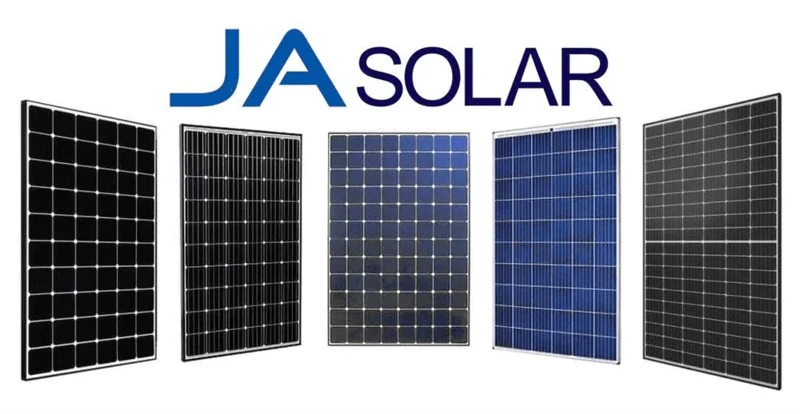
JA Solar (China) – Top 4 Solar Panels Manufacturers Ranking 2025
JA Solar ranks among China’s top four solar manufacturers. They ship massive volumes worldwide. By mid-2025, the company had delivered close to 300 GW of cells and modules total—a figure that puts them in the global top tier. Their H1 2025 performance showed 33.79 GW in shipments, with 0.119 GW reserved for internal use. What sets them apart is their export strength: overseas markets took about 45.93% of total module sales in the first half of 2025. S&P Global Commodity Insights recognized them as a Tier 1 supplier. This rating came from their shipment scale, geographic spread, and solid financials.
Technology Focus: N-Type TOPCon Leadership
JA Solar invested big in n-type TOPCon cell technology. They’ve become a mass-production leader in this space. The DeepBlue 4.0 Pro series shows their technical edge. These TOPCon modules deliver 430-590W across 54/72/78-cell formats. Module efficiency reaches 21.5-23.0%. Top bins hit over 23%. The temperature coefficient runs at -0.29 to -0.30%/°C—better than traditional PERC panels. Bifacial versions generate 5-30% extra power. This depends on ground reflectivity. The modules work well with standard residential and commercial inverters and racking systems. Installation is straightforward for contractors.
LONGi Solar (China) – Leading Solar Companies Worldwide with BC Technology Leadership
LONGi Green Energy is the world’s largest mono-silicon PV maker. Their 2024 module production hit 150 GW —beating JinkoSolar’s 130 GW. The company runs the whole value chain. Mono-silicon wafers, cells, and modules all come from their own facilities. This setup cuts costs and boosts quality control. Smaller companies can’t compete with that.
Massive Scale Meets Record Shipments
LONGi shipped 63.43 GW of solar cells and modules through September 2025. That put them at #2 globally for H1 2025 with 39.57 GW . Silicon wafer shipments reached 38.15 GW in those nine months. That’s up from 35.03 GW in 2024. Their 2025 goals are big: 120 GW wafer shipments and 80-90 GW module shipments . They expect BC modules to pass 25% of total output by year-end.
Back-Contact Technology Dominance
LONGi leads in BC (Back-Contact) tech. Their HPBC 2.0 modules shipped 14.48 GW through 9M 2025. That’s up from 13.77 GW in the same 2024 stretch. China buys 55% of BC sales. Overseas markets take the other 45%. They rolled out the world’s first 700W HIBC module in 2025. It blends HJT with back-contact design. You get 25.9% module efficiency and 259 W/m² power density . The cell inside hit a record 27.81% efficiency . LONGi calls this the “25%+ efficiency era” for commercial BC products.
Canadian Solar (Canada/China) – Best Solar Panel Companies for Global + US Manufacturing
Canadian Solar Inc. runs a dual-engine business model . This sets it apart from pure makers. The company splits into two parts: CSI Solar makes modules and storage. Global Energy builds and owns big solar projects. They make solar products and use them at scale. So they understand the market from both sides. Revenue breaks down 70-80% from CSI Solar and 20-30% from Global Energy . Q3 2025 hit $1.5 billion in total revenue . Both divisions shipped strong numbers.
Q3 2025 Shipment Performance
The company shipped 5.1 GW of modules in Q3 2025. Energy storage hit a big mark: 2.7 GWh delivered . That’s their biggest quarter ever for battery systems. These grid-scale BESS units in containers serve the growing utility storage market. The numbers show Canadian Solar can grow both tech areas at once.
U.S. Factory Growth
Their Mesquite, Texas factory ramped up by Q3 2025. The plant boosted both shipment volume and profit margins. Most 2025 spending went to U.S. factory builds and Asian capacity growth in China and Thailand. This spread cuts tariff risk. Plus, it puts them near key markets.
Big Solar Farm Products
Canadian Solar makes high-power utility modules . The HiKu/HiKu7 series uses n-type TOPCon cells . You get 22-23%+ module efficiency . Output runs from 550W to 700W+ based on setup. BiHiKu versions use glass-glass builds. These catch light from both sides. Ground setups see 5-25% bifacial gain based on how much light bounces off the ground. These modules fit large solar farms. Not rooftops.
Trina Solar (China) – Top 10 Solar Panel Manufacturers 2025 (Vertex 720W Leader)
Trina Solar has shipped over 205 GW total by mid-2025. This puts them in the global top 3-5 for module makers. The company started in 1997 from Changzhou, China. They control the whole chain—from wafers to modules. Kiwa PVEL named them “2025 Top Performer” for the 11th year straight . S&P Global and BloombergNEF both list Trina as Tier 1 for modules and storage. Market cap hit $6.79 billion by November 2025. This ranks them among the biggest green energy firms around the world.
Vertex Series for Big Solar Farms
The Vertex N 720W Bifacial gives you 720W output with 23.2% efficiency . Big solar projects want these specs. They drop electricity costs fast. The Vertex N 620W+ runs at 2000V design for longer strings. You get 620W power and 22.7% efficiency . These layouts boost string power. Plus, they cut balance-of-system costs. TrinaPro solutions handle 250 kW to 20 MW installations . Modules survive hail strikes and harsh weather. Tests back this up.
Record-Breaking HJT Efficiency
Trina set a world record in January 2025. Their HJT modules hit 25.44% efficiency . Fraunhofer ISE checked it. Five more tandem tech records came in July 2025. Current HJT versions reach 25.0% efficiency . That beats older PERC tech by a lot.
Why Buyers Choose Trina
Balanced price-performance brings in large buyers. High efficiency doesn’t mean high costs here. BloombergNEF Q2 2025 confirmed Tier 1 status for both modules and storage. RETC called them “Overall Highest Achiever.” Wood Mackenzie’s 2025 ranking shows 83.7 GW shipped in 2024 — top 4 worldwide . Strong finances and proven chains back every deal.
Integrated Storage Systems
Trina Storage pairs PV with batteries in one package. The Elementa 2 Pro Platform bundles DC blocks, transformers, PCS, and EMS for utility grids. By June 2025, they shipped 12+ GWh of storage around the world. Production runs 16 GWh now . It’s expanding to 25 GWh soon . BNEF ranked them Tier 1 for storage in Q3 2025 —the seventh quarter straight .

DMEGC Solar (China) – Fastest-Growing Top Solar Panels Manufacturers 2025
DMEGC Solar is part of Hengdian Group DMEGC Magnetics Co., Ltd. . They control the full production chain from wafer to module across six global manufacturing bases . This setup gives them tight quality control and cost advantages. The company ranked 5th in 2025 solar module manufacturer rankings based on 2024 data, scoring 83 out of 100 . Wood Mackenzie placed them 8th worldwide using 2023 figures. By H1 2024, their total shipments passed 50 GW . That puts them in the top 10 for module volume.
Manufacturing Scale & Automation Leadership
Production capacity reaches 23 GW/year for cells and 21 GW/year for modules . Their Lianyungang Phase II facility runs at 100% capacity . Every line produces Infinity N-type high-efficiency modules . The factory uses 5G industrial Internet, AI security systems , and automated production lines . Smart upgrades cut the production cycle from 16 seconds to 14 seconds per unit . Automation reduced staffing by ~10 workers per line . This drops processing costs. DMEGC’s profit grew +58.94% year-over-year despite industry-wide margin pressure. That’s proof of superior cost control and stable yields.
Infinity Series: N-Type Efficiency Leader
The Infinity N-type series ranks among the highest efficiency modules in TaiyangNews Top Solar Modules listings for N-type technology. It holds top positions for multiple months in a row. Kiwa PVEL’s 2024 PV Module Reliability Scorecard named DMEGC a “Top Performer” manufacturer. This proves both efficiency specs and long-term reliability. Proven performance data plus tier-1 rankings make DMEGC a solid choice for utility-scale projects. You get upfront efficiency and durability.
Tongwei Solar (China) – Most Vertically Integrated Solar Panel Manufacturers Ranking
Tongwei Solar controls both ends of the solar production chain like no other maker. Their 910,000 metric tons/year polysilicon capacity makes them the world’s largest producer in this critical raw material segment. That’s 10x their 2020 output . China dominates polysilicon globally—nine of the top ten makers are Chinese. Tongwei leads them all, ahead of GCL Technology, Daqo New Energy, and Xinte Energy.
Full Production Chain Control
The company runs the entire production line: polysilicon → wafers → cells → modules . This setup cuts costs and locks in stable materials. By late 2025, their capacities stand at 850,000 tons polysilicon , 20 GW ingots/wafers , 130-150 GW cells , and 75-95 GW modules . They became the first company to ship 300 GW+ solar cells total by mid-2025. That’s eight years straight leading global cell shipments. A multi-gigawatt module factory is under construction now.
Top TOPCon Performance Numbers
Tongwei’s TOPCon cells hit 25.67% front-side efficiency . Their 722W module reaches a 91.7% bifacial factor . Independent labs verified these numbers. Production versions reach 25.28% module efficiency and 778.5W output . This beats typical TOPCon’s 80-85% bifaciality. The Infinity RT series delivers 22.6% efficiency in real-world use.
Best For Stable Material Flow
Projects needing secure long-term contracts and reliable material flow match well with Tongwei. Their full production control removes third-party risks. Recent deals include a 52 MW solar farm contract in Malaysia with Constant Energy. This marks their Southeast Asia expansion. Ethical sourcing and forced-labor elimination strengthen their appeal for ESG-focused buyers.
Astronergy (CHINT SOLAR, China) – Best Rated Solar Panel Company for Europe & Middle East Projects
CHINT Group backs Astronergy with deep industrial resources and decades of electrical know-how. Smaller solar-only makers can’t match these advantages. The company operates from Hangzhou, Zhejiang, with offices across four continents . By H1 2024, they shipped 18.7 GW of modules —enough to claim the #6 spot worldwide . That volume puts them ahead of many established names. Their track record shows over 6,000 MW of solar power stations built around the world. They know both manufacturing and actual project work.
Manufacturing Footprint Spans Key Markets
Astronergy runs 8 GW annual module production capacity at their main facilities. They’re expanding fast outside China. Their Adana, Turkey factory produces 850+ MW of modules as of March 2025. A new Balıkesir industrial chain project is under construction now. This will add TOPCon 4.0 cell and module lines . These Turkish bases serve Europe and Middle East markets. No tariffs to worry about. Shipping times get cut down. Spain, Bulgaria, Romania, Thailand, India, Japan, South Africa, and the United States all have their projects. That’s serious geographic coverage.
TOPCon 4.0 Technology Push
The new Balıkesir facility will mass-produce TOPCon 4.0 cells . This tunnel oxide tech works better than older PERC designs. You get higher efficiency. Astronergy mixes TOPCon and PERC products based on what customers need. Big utility buyers want cost-smart TOPCon for maximum ROI. Commercial and industrial customers pick what fits their roof space and budget. Both options come from the same house. No need to outsource for different customer types.
Built for Large Project Developers
Astronergy delivered 6+ GW of power stations . They know what EPCs and developers need. Their modules pass bankability tests. Project finance teams trust their warranties. Overseas factories help with supply-chain mix. US and EU projects have strict sourcing rules. This setup handles those requirements.
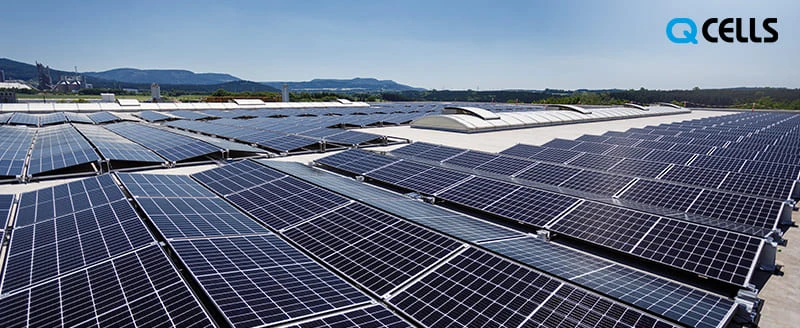
Hanwha Qcells (South Korea / Germany) – Best Rated Solar Panel Company in USA Residential & Commercial
Hanwha Group bought Germany’s Q-Cells in 2012. They turned it into a global solar powerhouse based in Seoul. The company runs major factories in South Korea, the United States, and Europe . Wood Mackenzie put them at #1 in U.S. residential and commercial solar markets for 2025. S&P Global gave them 2025 Tier 1 Cleantech Company status. Just 14 solar makers worldwide got this honor. Expert reviews rank Qcells 3rd overall for solar panels in 2025. That puts them ahead of most Chinese brands in premium segments. Their edge? Vertical integration . They handle everything—ingot production, module work, and recycling.
U.S. Manufacturing Power
Qcells operates 8.4 GW of module capacity at Georgia’s Dalton and Cartersville plants. This makes 46,000 panels each day . That’s enough to power 1.3 million homes per year . A new 3.3 GW Cartersville plant went live in 2025. The Whitfield County site just grew by 2 GW capacity . This added 510 jobs . Total U.S. spending topped $2.5 billion . They’ve built 4,000 clean energy jobs at American sites. Module shipments will hit 9 GW in 2025 . That’s up from 8 GW in 2024.
Q.ANTUM Technology & Next-Gen R&D
The Q.ANTUM PERC system packs up to 12 busbars . This speeds up electron flow. Power output jumps by 1% . Efficiency climbs past 22% in production units. Q.PEAK DUO home panels give you 410W at 21.2% efficiency . Half-cut cells cut down shading problems. The Q.TRON N-type line reaches 430W+ . Perfect for small roof areas. Qcells is trying out perovskite-silicon tandem cells in 2025. These cleared tough strength tests. Their AI tool Geli Predict™ software maps out solar-plus-storage setups. Combined systems slash energy bills 20-30% . Data center pollution drops by 35% .
First Solar (USA) – Best Solar Panel Company for Thin-Film CdTe Technology 2025
First Solar is the sole American company in the world’s top 10 solar manufacturers. Founded in 1999 in Tempe, Arizona, they chose a different route from Chinese competitors. Others chased silicon tech. First Solar bet on cadmium telluride (CdTe) thin-film technology instead. That choice paid off big. By 2025, they rank #9 worldwide but hold #1 in the United States . They make 25% more panels than the next-biggest American maker. Their modules cover 54.5 GW worth of utility projects booked through 2030.
US Manufacturing Powerhouse
First Solar runs 21+ GW global capacity as of late 2025. Around 14 GW comes from American factories . These include plants in Ohio, Alabama, Louisiana, and South Carolina. The new Louisiana AI-enabled facility opened in November 2025. It cost $1.1 billion . This plant adds 3.5 GW production . It created over 800 jobs . A $330 million South Carolina plant breaks ground soon. This adds 3.7 GW more by late 2026. Total US capacity will hit 17.7-18 GW by 2027 . Over $2 billion went into these expansions.
CdTe Thin-Film Technology Edge
The Series 7 TR1 delivers 500W+ output with 18-19% efficiency . That beats older thin-film versions. CdTe performs better in high heat, low light, and partial shade compared to silicon. You get 30-year warranties on these modules. Their carbon footprint is 2.5x lower than standard silicon panels. Energy payback time is 2x faster . Water use is 3x less . Each module gets recycled after its life ends. No other top-10 maker matches this environmental profile.
The 2025 solar module landscape is defined by rapid N-type adoption, higher efficiencies, and growing global capacity from leading manufacturers such as Jinko, LONGi, Trina, JA Solar, and others. Each brand offers unique strengths, but the best choice ultimately depends on your project scale, budget, and performance goals.
We’d love to hear your insights—share your thoughts or experiences with different solar panel brands. If you are exploring security cameras with solar panels, feel free to contact us at [email protected] for professional guidance and solutions.