Many homeowners upgrading their solar systems discover that cables and connectors often don’t match, leading to poor performance or unexpected compatibility issues. That’s where understanding different Solar Panel Connector Types becomes essential. This guide walks you through the connectors you’re most likely to see, what makes them reliable, and how to choose the right type before installation—so your system runs smoothly without costly rewiring later.
Overview of the Most Common Solar Panel Connector Types
_1757989339_WNo_1592d650.webp)
Solar Panel Connector Types play a central role in how safely and efficiently a PV system delivers power. They influence panel-to-inverter compatibility, long-term weather performance, and the overall reliability of outdoor wiring. Choosing the right connector early on helps prevent future compatibility issues, unnecessary energy losses, and avoidable maintenance work.
Today, MC4 connectors dominate almost all new installations. Nearly every panel produced in the past decade comes with MC4 pre-installed, making them the universal standard across residential rooftops, commercial buildings, and utility-scale solar farms. Their secure locking design, strong environmental durability, and broad cross-brand compatibility have set the benchmark for the entire category of solar panel electrical connectors .
Older systems may still rely on MC3 connectors, while a handful of specialised alternatives continue to serve niche or manufacturer-specific purposes. Examples include Amphenol Helios H4, Canadian Solar’s T4 connectors, and Europe’s Radox twist-lock models. In portable or off-grid applications, compact XT60 connectors remain popular thanks to their high current capacity and simple plug-and-play operation.
Because each connector family differs in voltage ratings, environmental protection, and installation methods, understanding their strengths and limitations is essential—whether you are upgrading a legacy system or designing a new one. The next sections break down the most widely used Solar Panel Connectors Types and explain where each option performs best.
MC4 Solar Panel Connector Types and Their Advantages

MC4 connector solar panels are the most widely used solar panel connector types across today’s PV industry. Since their introduction in 2004, they have become standard on nearly every modern solar panel thanks to their secure locking design, weather resistance, and strong cross-brand compatibility. Whether for homes, businesses, or utility-scale fields, MC4 remains the safest and most reliable connector family.
Standard MC4
A common choice for residential systems. Rated for 1000V DC and 30A, compatible with 4–10 mm² cables, and capable of operating from –40°C to 85°C with minimal electrical loss.
MC4-Evo2
A tool-free snap-in variant designed for faster installation. Supports 1500V DC and up to 70A, making it suitable for long string runs and commercial rooftop systems.
Weatherproof MC4
Enhanced insulation increases temperature tolerance to 90°C and helps reduce power loss to around 1.5%, improving stability in hot or desert environments.
High-Performance MC4
Built for utility and high-load installations. Handles 1500V DC and up to 40A with larger cable ranges (6–16 mm²), offering durable long-term performance.
Low-Resistance MC4
Uses upgraded contact materials to minimise internal resistance and maintain high efficiency—an advantage for systems sensitive to voltage drop.
Additional variants include corrosion-resistant industrial models and MC4 branch connectors for parallel wiring.

Why MC4 Leads the Solar Connector Market
MC4 remains the dominant Solar Panel Connector Type because it offers secure locking that prevents accidental disconnects and reduces arc-fault risk. Its universal compatibility works seamlessly with nearly all modern modules, optimisers, microinverters, and even portable systems that rely on a Jackery solar panel connector . With IP67–IP68 environmental protection, MC4 maintains long-term durability outdoors, supported by high-quality conductive materials that deliver stable efficiency for more than 25 years. UL and NEC compliance further reinforce MC4 as the safest and most widely accepted option across regulated markets.
Older and Less Common Connector Types (MC3, Radox, Others)
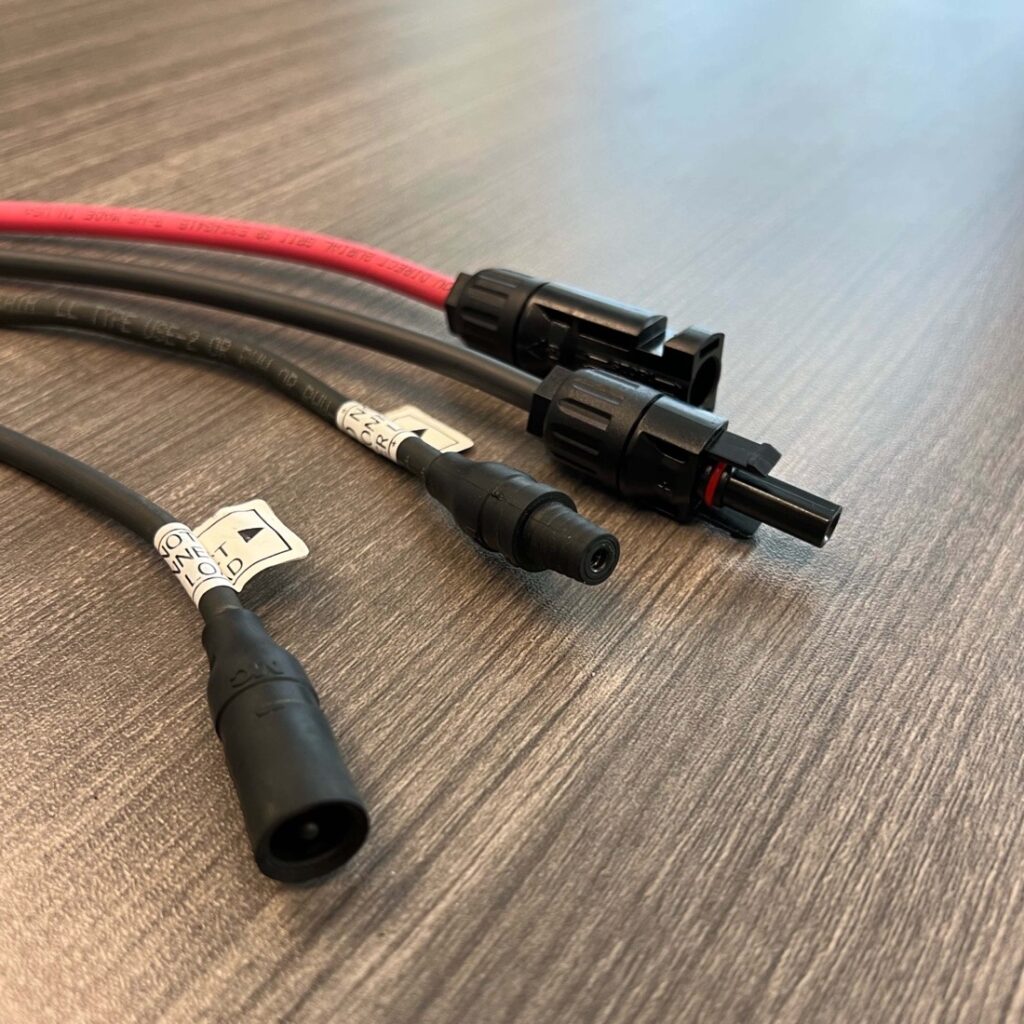
Before MC4 became the industry standard, several other Solar Panel Connector Types and solar panel wire connectors played important roles in early PV installations. While many of these connectors are now considered legacy components, they still appear in older arrays and in certain regional or specialised applications.
MC3 Connectors
MC3 connectors were widely used throughout the late 1990s and early 2000s. They supported up to 1000V DC and 30A and used copper contacts with TPE/PA insulation rated for –40°C to 90°C. These specifications suited smaller systems of that era, but MC3 has since been phased out as PV systems grew larger and safety requirements increased.
Why MC3 Declined
MC3’s IP65 rating offers only basic dust and water-jet protection, and its non-locking push-in design makes it susceptible to accidental disconnection under vibration or cable tension. This increases the risk of arcing and heat damage. As manufacturers shifted toward MC4-based cabling, compatible 2–6 mm² MC3 cables also became harder to source, limiting long-term maintenance options.
MC3 in Legacy Systems
Older arrays can often be identified by their 3 mm contact pins, which distinguish MC3 from MC4. Adapter leads can bridge MC3 panels to modern MC4 equipment, but availability is declining. For system expansions or repairs, replacing MC3 ends with MC4-compatible connectors is typically the safest and most future-proof approach.
Other Less Common Connector Types
A few specialised connectors have appeared over the years. Radox twist-lock connectors, for example, were used in certain European installations. Their mechanical and electrical design differs significantly from both MC3 and MC4, making long-term maintenance more challenging. Limited parts availability has led most projects to transition away from these older designs.
Industry Shift Toward MC4
The transition to MC4 simplified installation, improved environmental protection, and reduced ongoing maintenance—key reasons why MC4 remains the dominant choice among modern types of solar panel connectors .
Key Differences Between Solar Panel Connector Types

Comparing Solar Panel Connector Types becomes much easier when you focus on four core performance areas: electrical capacity, environmental protection, connection security, and long-term durability. The following breakdown shows how MC3, MC4, T4, and Helios H4 connectors differ in real-world PV installations .
Voltage and Current Capacity
Connector Type | Voltage Rating | Current Capacity | Notes |
|---|---|---|---|
MC3 | 600–1000V DC | 15–30A | Suitable only for older or small systems |
MC4 | 1000–1500V DC | 30–40A | Industry standard; strong conductivity with 4 mm pins |
T4 | Up to 1500V DC | 40–70A | Designed for commercial and industrial arrays |
Helios H4 | Up to 1500V DC | High current | Strong pin design for utility-scale loads |
Environmental Protection (IP Ratings)
Connector Type | IP Rating | Durability Notes |
|---|---|---|
MC3 | IP65 | Limited dust/water resistance; ages quickly outdoors |
MC4 | IP67 | UV-resistant, moisture-resistant; long-term reliability |
T4 | IP68 | Enhanced waterproofing for harsh climates |
Helios H4 | IP68-grade | Excellent UV, salt, and chemical resistance |
Locking Mechanism and Safety
Connector Type | Locking System | Safety Notes |
|---|---|---|
MC3 | Basic push-in | Higher risk of disconnection and arcing |
MC4 | Positive lock (tool required) | Prevents accidental release; code-compliant |
T4 | Tool-assisted disconnect | Faster installation with a secure lock |
Helios H4 | Tool unlock | Withstands vibration and heavy cable loads |
Material Quality and Lifespan
Connector Type | Material Composition | Durability |
|---|---|---|
MC3 | Tin-plated copper, TPE/PA housing | Shorter lifespan; often fails after 10+ years |
MC4 | Red copper pins, PA66 UL94-V0 housing | Typically lasts 25+ years; strong UV/heat/salt resistance |
T4 | High-grade copper alloys & polymers | Stable in extreme temperature ranges |
Helios H4 | Beryllium copper with reinforced housing | Exceptional mechanical strength over decades |
Compatibility and Standards
Connector Type | Compatibility | Compliance |
|---|---|---|
MC4 | Works with most modern panels, inverters, and optimisers | UL & NEC compliant |
T4 | MC4-compatible; common on Canadian Solar modules | Approved for commercial installs |
Helios H4 | MC4-compatible | Recognised premium alternative |
MC3 | Legacy systems only | Outdated; limited replacement parts |
Critical Safety Warning: Mixing Connectors
Even when two connectors physically fit together, they may not be electrically compatible. Many generic MC4-style connectors lack proper UL certification, which can lead to:
Increased contact resistance
Heat buildup under load
Faster material degradation
Severe fire risks
Always verify certification and manufacturer compatibility before mixing Solar Panel Connector Types within a single system.
Choosing the Right Solar Panel Connector Type for Your PV Project
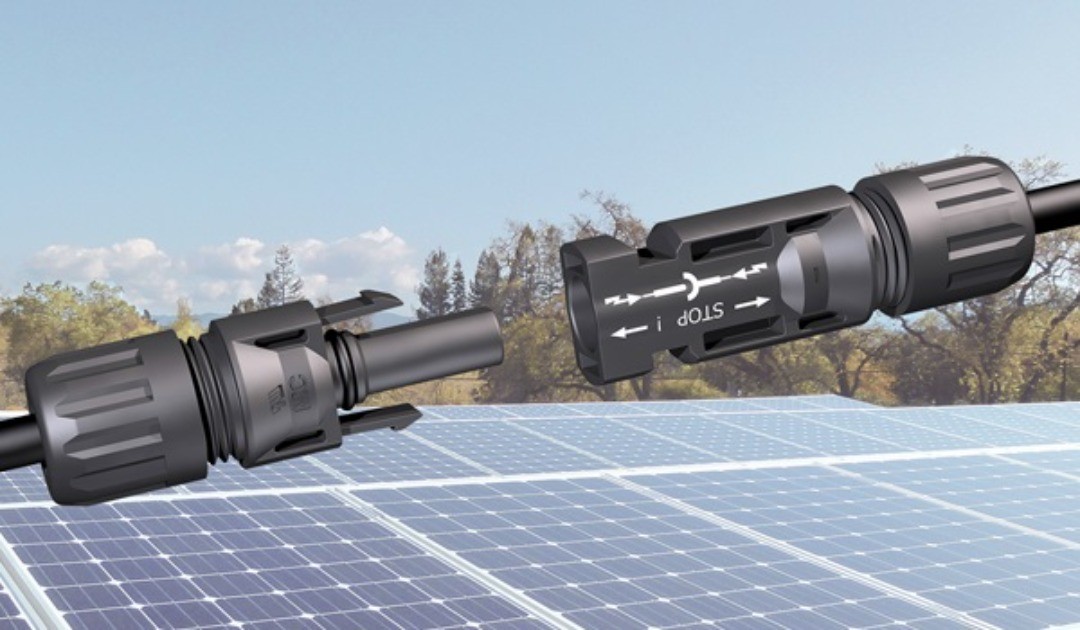
Choosing the correct Solar Panel Connector Type starts with understanding system voltage, current, and environmental conditions. The right connector ensures reliable performance today—and easier expansion in the future.
Residential Systems (<10 kW)
Most homes use standard MC4 connectors, which support 1000V DC and up to 30A. Because nearly all modern panels ship with MC4 pre-installed, installation is straightforward and rarely requires adapters.
Commercial Systems (10–100 kW)
Large rooftops benefit from high-capacity connectors such as MC4-Evo2 (1500V DC, up to 70A). Canadian Solar’s T4 connectors also perform well thanks to tool-free assembly that speeds deployment on multi-string arrays.
Utility-Scale Systems (>100 kW)
Utility sites often choose Amphenol Helios H4 connectors. Their beryllium-copper contacts and reinforced housings withstand decades of thermal cycling and support 30–50% more current than standard MC4 models.
Off-Grid and Portable Systems
Anderson Powerpole connectors dominate modular setups such as RV solar, camping kits, or portable generators. Their genderless design allows quick re-configuration without worrying about polarity.
Considering Environmental Conditions
Coastal regions
Salt exposure accelerates corrosion. Premium MC4 connectors with reinforced sealing last significantly longer in marine environments.
Desert climates
High heat and UV stress demand robust polymers. Amphenol connectors perform well under rapid temperature swings, while standard MC4 may lose up to 15% of its expected service life.
Industrial or polluted sites
T4 connectors with IP68 protection excel in dusty or chemically harsh environments.
Upgrading Older Systems
Early-2000s arrays often used MC3 connectors. Although MC3-to-MC4 adapters exist, each adapter adds 0.5–1% power loss. Re-terminating panels with MC4 connectors is inexpensive and often pays back within 3–5 years.
Installation Best Practices to Maximise Connector Safety and Performance
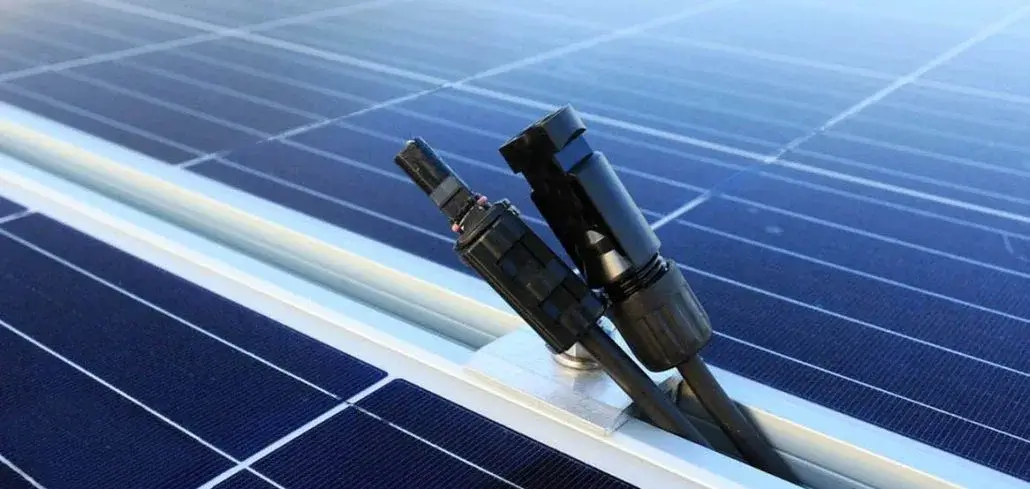
Nearly half of PV system failures originate from connector problems—usually due to installation errors. Proper techniques ensure all Solar Panel Connector Types, especially MC4, T4, and Helios H4, perform safely for decades.
Correct Mating Force
Standard MC4 connectors require 5.5–7 lbs of pressure until a clear click confirms full engagement. Forcing misaligned connectors can deform contacts and create long-term hot spots. Apply even pressure and check polarity before mating.
Terminal Position Assurance (TPA)
TPA locks prevent terminals from backing out during vibration or thermal cycling. Skipping this step can lead to micro-arcing and rising resistance over time.
Avoiding Common Installation Errors
Incomplete mating: Always perform a 15–20 lbs pull-test.
Incorrect orientation: Forcing mismatched connectors damages alignment keys.
Improper crimping: MC4 contacts require 7–8 mm of stripped conductor. Use certified tools for consistent crimps.
Testing and Verification
HALT testing (–40°C to +90°C cycling + vibration) identifies weak crimps.
Commercial sites should test ≥5% of all connections; residential systems should test every 10th connector.
Pull-test results should exceed 50 N.
Worker Safety and Ergonomics
Position connectors at waist height to reduce fatigue. Use 1000V-rated gloves and eye protection, especially when testing crimps.
Long-Term Maintenance
Inspect annually for discolouration, heat marks, cracked housings, or weakened latches. Replace connectors that separate under a <30 lbs pull force.
Standards and Training
Following IPC/WHMA-A-620 ensures consistent workmanship. Training records support warranty and insurance claims, while visual guides and checklists help installers maintain proper assembly across all Solar Panel Connector Types, including modern solar panel cable connectors that require precise crimping and verification for long-term reliability.
Future Trends Influencing Solar Panel Connector Types
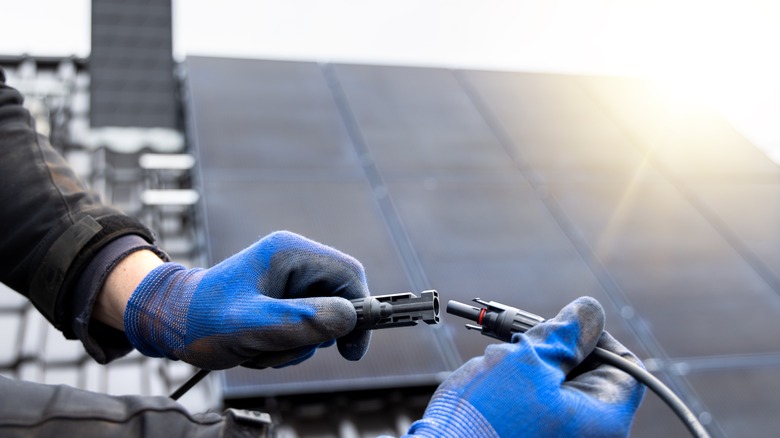
As PV systems become larger and more integrated with energy storage, EV charging, and smart-grid platforms, several major trends are shaping the next generation of Solar Panel Connector Types.
Higher Voltage Architectures
Utility-scale arrays increasingly use 1500V–1800V systems, reducing transmission losses by up to 35% and lowering BOS costs. Older connectors, such as MC3 and early MC4 versions, cannot safely handle these voltages. New designs include thicker insulation, improved heat dissipation, and stronger arc suppression.
Smart, IoT-Enabled Connectors
Next-generation connectors integrate sensors and surge-protection elements to monitor voltage, current, and temperature in real time. These features help operators detect failures early, improving system uptime and energy yield. As smart homes, batteries, and EV charging expand, intelligent connectors will become more widely adopted.
Advanced Materials
Innovations improving durability and efficiency include:
High-temperature polymers rated beyond 90°C
Anti-corrosion coatings with 50% better performance
Lightweight housings that reduce installation fatigue
Smaller, higher-density designs that maintain 40A capacity in compact formats
Plug-and-Play Designs
Tool-less connectors reduce installation labour by 35–45% and can save 8–12 hours per 100 kW on commercial systems. Improved alignment keys and locking mechanisms ensure speed does not compromise safety.
Market Trends and Regulations
Commercial PV is growing at 15.8% per year.
Microinverter/optimiser systems requiring hybrid data-and-power connectors are growing over 18% annually.
Policies such as the U.S. IRA and EU Green Deal are boosting demand for certified, locally produced connectors.
Stricter IEC/UL standards are eliminating low-quality imports and raising performance expectations across all Solar Panel Connector Types.
Choosing the right Solar Panel Connector Types is ultimately about building a system that stays safe, efficient, and easy to expand. Understanding MC4 as the modern standard—and knowing when options like T4 or Helios H4 fit specific needs—helps ensure stable long-term performance across any PV setup. The same principles apply to solar-powered devices beyond traditional panels. In our solar security camera systems, reliable connectors are just as critical for delivering consistent power, weather-proof operation, and long service life. By pairing high-quality connectors with well-engineered solar modules, your camera network is better prepared for 24/7, low-maintenance performance over the next 20–30 years.