Choosing between series vs parallel solar panels is one of the most important design decisions when building a solar power system. The way your panels are wired directly affects voltage, current, shading behavior, wiring cost, controller compatibility, and overall system performance. Although both wiring methods deliver the same total wattage, they behave very differently in real-world installations.
This guide explains how series, parallel, and hybrid wiring configurations work, how they impact voltage and current, and how to match them to your inverter or charge controller. Whether you’re designing a rooftop system, upgrading an RV setup, or optimizing an off-grid battery bank, understanding the differences between series vs parallel solar panels ensures you choose the most efficient and cost-effective layout for your site conditions.
Series vs Parallel Solar Panels: How Series Wiring Works

Solar panels in series form a single electrical path—like train cars linked together. Current flows through each panel in sequence, while voltage rises across the entire string. This behavior is a key part of understanding Series vs Parallel Solar Panels because the series configuration directly affects total system voltage, controller compatibility, and long-distance power efficiency.
How Series Wiring Functions in Solar Panel Systems
To wire home solar panels in series, connect the positive terminal of one panel to the negative terminal of the next. In this type of solar panel configuration:
Current remains the same across all panels (typically 8–10A)
Voltage adds up (three 40V panels = 120V total)
Total resistance increases as more panels are added
For example: Four 300W panels rated at 40V and 7.5A produce a combined output of 160V at 7.5A, delivering 1,200W. This high-voltage, low-current behavior is one of the common advantages when choosing between series vs parallel solar panel wiring for rooftop or ground-mount systems.
Series Solar Panels Weakness: Understanding the Chain Effect
The major drawback of series-connected solar panels is that a single weak panel lowers the performance of the entire string. Shading, dirt buildup, aging cells, or wiring faults reduce current for every module. This dependency is a key factor when comparing Series vs Parallel Solar Panels kits because parallel wiring avoids this issue.
Bypass diodes allow current to flow around shaded or weakened sections, preventing a complete shutdown. However, they cannot restore full power, so proper site evaluation is essential when planning a series-based layout.
Best Use Cases for Series Solar Panel Wiring
Series wiring is most effective where a high-voltage solar panel configuration is required. It is commonly used for:
String inverters needing 300–600V DC
Battery charging systems that require matched input voltage (24V, 48V banks)
Installations that must meet specific MPPT voltage thresholds
Commercial or residential arrays with consistent sunlight and minimal shading
Installers comparing series vs parallel wiring often select series strings for their simpler layout, lower wiring cost, and clean system design—especially in locations with stable, uniform sunlight.
Series vs Parallel Solar Panels: How Parallel Wiring Works

In a parallel solar panel setup, all positive terminals connect to a shared positive bus, and all negative terminals connect to a shared negative bus. This creates multiple independent current paths feeding into one output, which is a key distinction when comparing Series vs Parallel Solar Panels and choosing the best wiring method for shade-heavy or flexible installations.
How Parallel Wiring Operates in Solar Panel Systems
When solar panels are wired in a parallel configuration:
Voltage stays the same as a single panel (typically 30–40V)
Current increases across panels (four 8A panels = 32A total)
Total array current follows the formula: I_total = I₁ + I₂ + … + Iₙ
For example, four 300W panels rated at 40V and 7.5A wired in parallel still produce 1,200W, but the output becomes 40V at 30A. This low-voltage, high-current behavior is one of the defining differences between series vs parallel solar panel wiring.
Parallel Solar Panels and Shading Resilience Explained
Parallel wiring avoids the chain effect that affects series systems. Each panel works independently, so shade, dirt, or a mismatch on one module reduces only that panel’s output while the others continue generating normally. This independence is one of the major benefits highlighted in Series vs Parallel Solar Panels comparisons, especially in environments with shifting shade patterns.
Parallel wiring is ideal for:
Rooftops with partial shading from trees or nearby obstructions
Microinverter systems requiring low DC voltage (40–60V)
Off-grid battery charging with high-current MPPT controllers
RVs, boats, and mobile setups with inconsistent panel angles
Parallel Wiring Trade-Offs: Higher Current and Added Costs
The main drawback of parallel solar panel wiring is the higher total current, which demands:
Thicker cables to prevent overheating
Larger fuses or circuit breakers
More robust connectors and combiner components
These requirements typically increase material costs by 20–30% compared to series wiring. Installers often weigh this higher wiring cost against improved shading performance when deciding between Series vs Parallel Solar Panels.
Series vs Parallel Solar Panels: Hybrid (Series-Parallel) Wiring Explained

Many solar systems need both higher voltage and higher current. A series-parallel configuration achieves this by wiring panels in series to raise voltage, then wiring those series strings in parallel to increase total current.
How Hybrid Series-Parallel Solar Wiring Works
You first build series strings that meet your voltage requirement, then combine multiple strings in parallel. A common example is a 2S4P configuration—two strings with four panels each:
Each string of four panels in series: 72V at 5.56A
Two identical strings in parallel: 72V at 11.12A total
Voltage remains the same as a single string, while current doubles. Total power equals voltage × current, so this layout delivers 72V × 11.12A ≈ 800W.
Controller Requirements for Hybrid Solar Panel Wiring
Charge controllers set strict limits on both series and parallel configuration:
Max panels per string = controller max voltage ÷ panel Voc
Max parallel strings = controller max current ÷ panel Isc
For example, a Renogy 40A MPPT controller with a 100V input limit may not support a full series string or a fully parallel array. A hybrid layout helps stay within both voltage and current constraints.
Key Matching Rules for Safe Hybrid Solar Wiring
Only parallel strings with matching electrical characteristics. All strings must:
Use the same panel model
Contain the same number of panels
Produce an identical voltage
Mismatched strings cause major power loss and may damage the controller or wiring.
Voltage and Current: How Series vs Parallel Solar Panels Behave Electrically
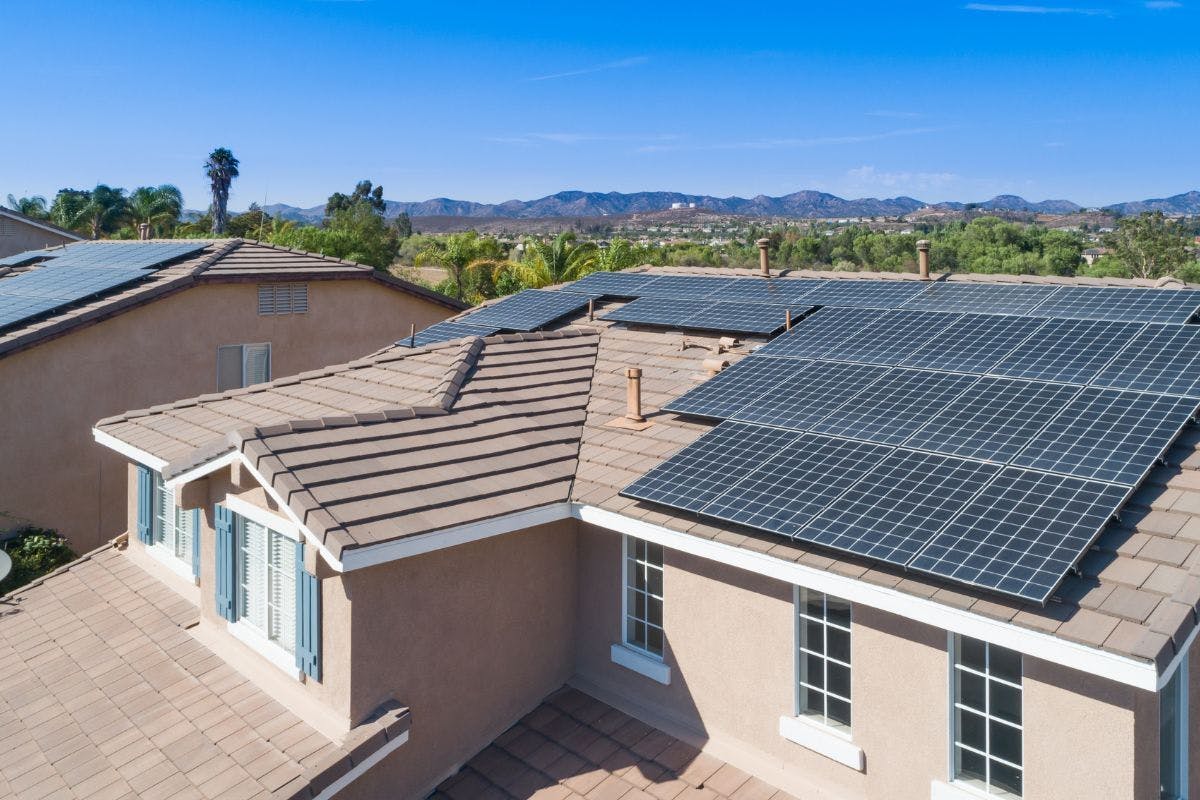
Series and parallel wiring create opposite electrical effects. Series wiring increases voltage while current stays constant. Parallel wiring increases current while voltage stays the same. These behaviors determine whether your solar array will match your inverter or charge controller requirements.
Series Solar Panel Wiring: How Voltage Increases
When panels are wired in series, their voltages add while the current remains unchanged.
Example with three 40V/8A panels:
Voltage: 40V + 40V + 40V = 120V
Current: 8A
Power: 120V × 8A = 960W
This follows Kirchhoff’s voltage law—panels act like stacked batteries. The current is limited by the weakest panel in the string.
In real-world conditions, voltage drops slightly under load due to internal resistance. Heat also reduces voltage by about 0.5% per °C above 25°C, meaning a 120V string may fall to around 108–115V depending on temperature and load.
Parallel Solar Panel Wiring: How Current Increases
In a parallel configuration, the voltage stays the same as a single panel, while the currents add together.
Using the same three 40V/8A panels:
Voltage: 40V
Current: 8A + 8A + 8A = 24A
Power: 40V × 24A = 960W
Each panel feeds current into a shared bus. Higher current requires thicker wiring—24A typically needs 10 AWG copper—whereas the same system in series may need only 14 AWG. This wiring difference can add $150–$300 to installation costs.
Matching Solar Panel Wiring to Controller and Inverter Limits
Charge controllers and inverters impose strict voltage and current limits:
Exceeding max voltage (often 100–150V on MPPT controllers) triggers shutdown or causes damage.
Exceeding the max current trips breakers or overheats components.
Example with a Victron SmartSolar 100/50 controller and 18V/5.5A panels:
Max panels in series: 100V ÷ 18V ≈ 5 panels
Max parallel strings: 50A ÷ 5.5A ≈ 9 strings
Staying within both limits ensures safe and efficient operation.
Wiring Complexity and Cost in Series vs Parallel Solar Panels

Wire gauge, connector count, and overall wiring layout directly affect material cost and installation time. Series wiring is typically the simplest, parallel wiring requires the most hardware, and hybrid layouts fall between the two.
Series Solar Panel Wiring: Lowest Material Cost
Series wiring keeps current low—usually 8–10A—allowing the use of lighter wire such as 12 AWG or 14 AWG and only two conductors running through the array.
Typical cost for an 8-panel series string:
50 ft of 12 AWG wire: $35–$45
MC4 connectors (8 pairs): $40–$60
Combiner box: not required
Labor: 2–3 hours
Total cost: $75–$105. Fewer connections simplify installation and reduce failure points.
Parallel Solar Panel Wiring: Higher Hardware Requirements
Parallel wiring increases total current as more panels are added. Four 8A panels produce 32A, requiring thicker wire such as 6 AWG. Each panel also needs its own run to the combiner box, greatly increasing wire length and component count.
Approximate cost for an 8-panel parallel setup:
400 ft of 8 AWG wire: $280–$360
MC4 connectors (16 pairs): $80–$120
Combiner box with breakers: $150–$250
Bus bars and fuses: $60–$90
Labor: 5–7 hours
Total cost: $570–$820—about 6–8 times that of a series configuration. More wiring and components also increase long-term maintenance risk.
Hybrid Solar Wiring: A Balanced Cost-Performance Approach
A hybrid layout balances voltage and current requirements. Wire gauge is lighter than full parallel, and fewer home runs are needed. A 2S4P configuration (two strings of four panels) offers an effective cost-performance compromise.
Cost efficiency tends to peak with fewer than 10–15 wiring variations. For most residential systems, keeping string count below five prevents unnecessary complexity and avoids diminishing returns.
Charge Controller Compatibility for Series vs Parallel Solar Panels

Your charge controller defines the safe electrical limits for your solar array. Staying within its voltage, current, and power ratings prevents shutdowns, reduced performance, or permanent equipment failure.
Battery Voltage Requirements for Solar Panel Wiring
Controllers are designed for specific system voltages—typically 12V, 24V, or 48V—and your battery bank must match.
A 12V battery charges at about 14.6V, so the controller must operate at least 10% above that (≈16V) to ensure proper charging. Some controllers auto-detect battery voltage, while others lock to a single setting.
Understanding Max PV Voltage Limits for Controllers
Controllers have a maximum PV open-circuit voltage (Voc). Exceeding it causes immediate shutdown or internal damage.
Cold weather increases panel voltage by about 0.35% per °C below 25°C. A 120V array can rise to around 134V at –10°C, enough to exceed a 150V controller’s limit.
A safe practice is to keep the array Voc below 130% of the controller’s rating.
MPPT Operating Window Requirements for Solar Arrays
MPPT controllers track power only within a specific voltage range, often 30–140V. Your array’s Vmp must fall inside this window.
Example: the Schneider Conext MPPT 60 150 supports up to 140V operating and 150V Voc.
A quick field estimate: measure panel voltage at noon and multiply by 1.43 to approximate ideal string voltage.
Controller Current Rating Requirements for Solar Wiring
Controllers must handle the total array current with a safety buffer.
Example: A 1,000W array on a 48V battery generates ~20.8A. Adding a 25–30% margin means selecting a controller rated around 27A.
Running current above 1.25× the controller’s limit stresses components; 1.5× can cause failure.
Temperature Compensation in Solar Charging Systems
Lead-acid batteries require an adjusted charging voltage based on temperature. The standard compensation is about 3 mV/°C per cell.
Incorrect compensation—off by more than ~0.8V—can result in undercharging, overcharging, or premature battery wear.
Maximum PV Power Capacity Limits for MPPT Controllers
A controller’s MPPT capacity depends on its maximum voltage and max charging current.
A 150V/60A controller can theoretically accept up to 9,000W, but usable power varies by battery voltage and the controller’s MPPT efficiency.
Manufacturers often specify recommended array sizes—for example, a 60A controller on a 48V system may support about 4,080W.
Using Multiple Controllers in Parallel Solar Systems
Multiple controllers can charge the same battery bank only if their output voltage settings match exactly.
A difference such as 48V vs. 50V creates circulating currents that can overheat wiring or damage both controllers. Always synchronize charge profiles before connecting units in parallel.
Battery Chemistry Matching for Solar Panel Charging Systems
Each battery type requires a specific charging profile. Flooded, AGM, gel, and lithium batteries all use different voltage limits and charging behavior.
Lithium batteries are especially sensitive: a 48V 100Ah pack with a 100A max charge rate must be paired with a controller that does not exceed this limit—otherwise, warranty issues or thermal events may occur.
How to Choose Between Series vs Parallel Solar Panels (Application Scenarios)

Solar panel series vs parallel perform differently depending on shading, system voltage requirements, and overall design goals. Selecting the right wiring method ensures higher efficiency, better equipment compatibility, and lower installation costs.
Best Use Cases for Series Solar Panel Wiring
Series wiring is ideal when sunlight is stable and shading is minimal.
Unshaded rooftops or ground-mount arrays
Series strings perform well in open areas with uniform exposure, helping systems maintain high efficiency.
String inverter systems
Most string inverters (such as Fronius Primo or SMA Sunny Boy) require 300–600V DC. Series wiring reaches these voltage levels easily with fewer components.
High-voltage battery charging
Off-grid 24V or 48V battery banks benefit from higher series voltage, helping MPPT controllers operate more efficiently without boosting low input voltage.
Budget-focused installations
Series wiring uses thinner cables and fewer connectors. An 8-panel series array often costs under $105 in wiring materials—much cheaper than parallel wiring.
Best Use Cases for Parallel Solar Panel Wiring
Parallel wiring works best where sunlight conditions vary or equipment requires low voltage.
Partial shading
Each panel operates independently, so shade on one panel reduces only that panel’s output. This maintains much higher overall production compared to series wiring.
Microinverter systems
Parallel wiring keeps panel voltage low (30–60V), matching the input requirements of microinverters such as Enphase IQ8.
Modular or phased expansion
Panels can be added easily over time without recalculating the string voltage or redesigning the entire array.
Marine and RV installations
Panels on moving vehicles face different angles and shading patterns. Parallel wiring prevents misaligned panels from affecting the rest of the system.
Best Use Cases for Hybrid Series-Parallel Solar Wiring
Hybrid wiring combines higher voltage from series connections with higher current from parallel connections.
Large residential systems (8 kW+)
Configurations such as 3S10P help meet inverter voltage needs while remaining within NEC safety limits.
Moderate shading with higher energy demand
Multiple parallel strings keep the system producing even when one roof section becomes shaded.
Charge controller voltage and current limits
Hybrid layouts help avoid overvoltage in full-series setups and overcurrent in full-parallel setups.
Example: a 150V/60A controller may pair well with a 5S2P layout (~90V, 16A).
Balanced cost and performance
Hybrid systems use lighter wire than full-parallel and offer better shade tolerance than pure series, often saving $180–$240 in materials.
Parallel vs series solar panels each offer clear advantages depending on shading, voltage requirements, and system design goals. Series wiring provides higher voltage, simpler installation, and lower cost—ideal for string inverters and uniform-sunlight environments. Parallel wiring improves shade tolerance and supports microinverters, modular expansion, and mobile applications. Hybrid configurations combine both strengths for larger systems or sites with mixed exposure.
By matching your wiring method to equipment limits, battery voltage, and environmental conditions, you can avoid costly redesigns and significantly improve system reliability and output. With the right configuration in place, your solar array will operate more efficiently, charge your batteries more effectively, and deliver better long-term performance across a wide range of applications.