In recent years, the solar-powered security camera has gained strong popularity as people look for smarter, greener ways to protect their homes and businesses. Unlike traditional wired systems, it uses solar energy to operate independently—making it ideal for remote or off-grid areas. Beyond saving electricity, solar-powered setups appeal for their easy installation and minimal maintenance.
Are Solar-Powered Security Cameras Worth It?
Yes, they can be worth it—especially for remote or hard-to-wire locations. A solar powered security camera offers flexibility, energy savings, and easy setup, making it a great choice for areas with limited power access. However, expect some trade-offs, such as higher upfront costs and sunlight dependence.
A solar-powered security camera is worth considering if you value flexible placement, low maintenance, and long-term energy savings. But before you decide, it’s important to understand exactly how these systems work and what determines their reliability.
Understanding How a Solar Powered Security Camera Works
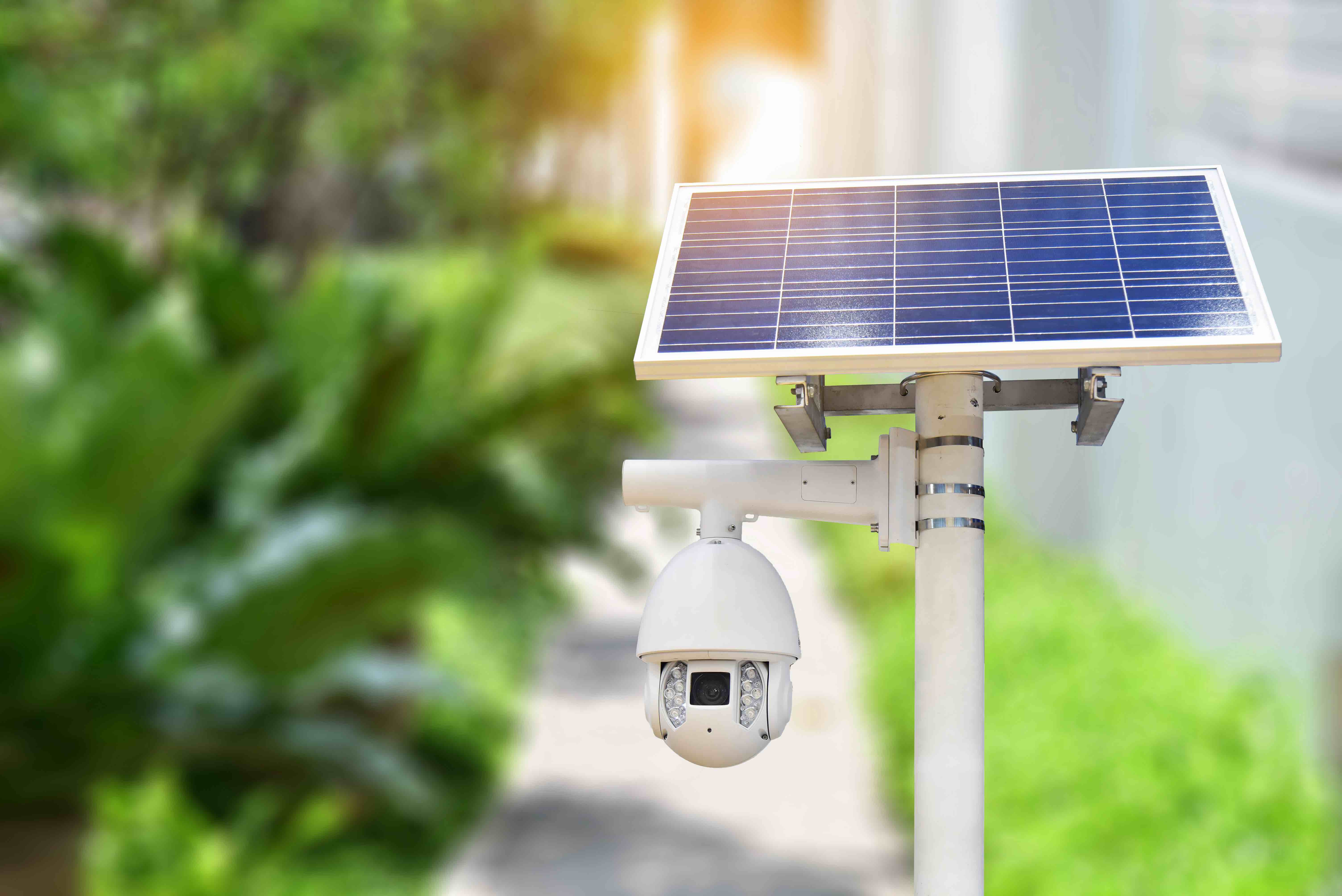
A solar powered outdoor security camera, especially the latest models in 2025, converts sunlight into electricity through photovoltaic (PV) technology to ensure continuous operation without relying on grid power. This makes it ideal for remote or off-grid areas. Let’s look at how each core component works and how sunlight efficiency affects performance.
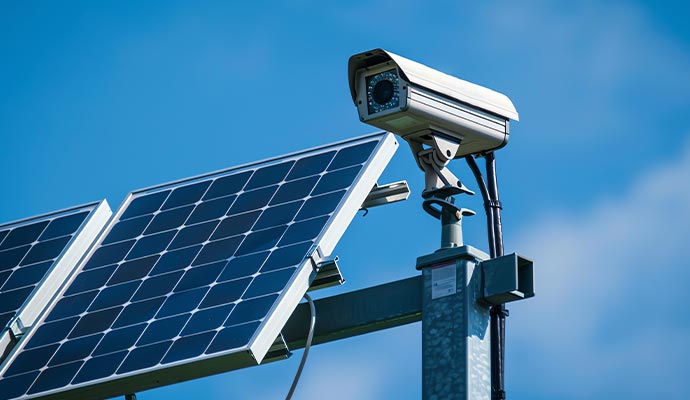
Key Components of Solar Powered Security Cameras
1. Solar Panel — Capturing and Converting Sunlight
The solar panel absorbs sunlight and turns it into electricity using photovoltaic cells. High-efficiency panels are crucial, as they determine how quickly batteries recharge and how well the system performs during cloudy or low-light conditions.
2. Rechargeable Battery — Storing Energy for Night Use
A rechargeable lithium-ion or gel cell battery stores excess energy produced during the day to power the solar powered wireless security camera at night or on overcast days. Lithium batteries are favored for their high energy density, long life cycle, and consistent performance.
3. Camera & Power Management — Smart Energy Distribution
The power management unit regulates energy flow between the panel, battery, and camera. It ensures stable operation for features like motion detection, wireless connectivity, and infrared night vision. When sunlight is available, the system uses direct solar power; when it’s not, it switches to stored battery power — maintaining 24/7 surveillance continuity.
Power Storage and Night/Cloudy Day Operation
During the day, solar panels continuously charge the battery.
At night or in bad weather, the camera draws power from storage.
Well-designed models—especially the best solar powered security cameras in 2025—can typically operate 8–12 hours on a full charge, maintaining stable performance even during cloudy or low-sunlight periods. This efficient day-night power balance makes them perfect for outdoor and remote monitoring.
How Sunlight and Battery Efficiency Impact Performance
Performance mainly depends on sunlight exposure and battery quality.
Sunlight Exposure: Install panels in areas with direct sunlight. Shaded walls or frequently overcast regions reduce charging efficiency.
Battery Capacity & Quality: High-grade batteries store more power and recharge faster, even with limited daylight. Some advanced models use temperature-resistant batteries that perform well in extreme heat or cold.
Winter Performance: Shorter days and low temperatures can lower efficiency. Choosing an IP66-rated solar powered camera helps ensure durability and year-round reliability.
By understanding how solar powered outdoor security cameras generate and store energy, it becomes clear that their performance depends on efficient sunlight use, smart power management, and quality components. Yet, beyond technical capability, many users also consider whether these solar powered security camera systems make financial sense in the long run. To truly evaluate their practicality, it’s essential to look at the full picture — including installation, maintenance, and overall cost efficiency.
Cost Analysis: Are Solar Powered Security Cameras Truly Worth the Investment?
Solar powered security cameras may seem expensive initially, but once you consider installation, energy savings, and minimal upkeep, the total cost often matches—or beats—traditional wired systems. Let’s break down the real expenses and long-term value.
Initial Hardware Costs: Higher Upfront, Lower Hassle
Solar camera kits generally cost more at purchase — about $800–$1,200 for a four-camera system, compared with $400–$600 for wired or battery-powered setups. The added expense comes from solar panels, larger batteries, and weatherproof housings.
However, installation is where you save. Wired systems often need professional labor ($400–$800), while solar models are DIY-friendly, including mounting kits and app-based setup guides.
Estimated total upfront cost: $800–$1,400 — roughly equal to a fully installed wired system.
Price and Value Breakdown by Model Tier

Tier | Example Models | Features | Price Range (USD) |
|---|---|---|---|
Entry-Level (1080p) | Generic Solar Kits | Basic motion detection, single solar panel | $79–$129/unit |
Mid-Range (2K–4K) | Reolink Argus 3 Pro, Eufy SoloCam S40 | Smart alerts, integrated solar, large battery | $149–$249/unit |
Premium PTZ (4K) | Reolink RLC-823A, Lorex 4K Solar PTZ | 360° pan/tilt, AI tracking, enhanced night vision | $200–$350/unit |
Long-Term Savings of Solar Security Camera Systems
Once installed, solar cameras have virtually no recurring costs.
Zero Energy Bills: Solar power eliminates electricity expenses — saving up to $200 over five years.
No Battery Replacements: Rechargeable lithium or gel batteries last 3–5 years, unlike disposable ones that cost $80–$160 to replace.
Minimal Maintenance: Panels only need occasional cleaning ($0–$50 over five years), while wired systems may require $200–$400 in repairs.
Final Evaluation: The Real Cost Advantage
For properties without convenient power access, solar powered cameras are a smart financial and practical choice. Though pricier upfront, they typically pay for themselves within 2–3 years through savings on labor, power, and maintenance.
Over five years, total ownership costs often match or undercut wired systems — with the added benefits of zero energy bills, easy setup, and eco-friendly operation.
Verdict: Investing in security cameras solar powered is worthwhile if you value long-term savings, installation flexibility, and sustainable performance.
Installation and Placement Tips for Solar Powered Security Camera Systems
One of the biggest advantages of a solar powered security camera is flexible installation. With no need for wiring or grid power, these cameras can be placed almost anywhere — from remote farms and construction sites to large yards, cabins, and rural gates where wired systems can’t reach.
Wire-Free & Quick Setup
Solar cameras eliminate trenching, drilling, and electrical work. Models like ANRAN Q3 Max and LVT outdoor units can be mounted on walls, poles, or trees in minutes using basic brackets.
Most setups take under 30 minutes and are ideal for temporary or mobile use — such as parking lots, outdoor events, or construction zones. When needs change, the cameras can easily be moved and reinstalled without extra wiring.

Coverage in Remote and Hard-to-Reach Areas
Solar systems are designed for off-grid and rural environments where power is limited. Whether monitoring livestock, gates, or equipment, these cameras run reliably on stored solar energy.
Multiple units can cover wide properties without expanding electrical lines, cutting both installation time and long-term costs — perfect for farms, cabins, and mobile operations.
Cost and Consumer Data
Solar powered security camera don’t just simplify setup — they also reduce expenses.
Installation savings: Avoid $300–$700 per site in wiring and trenching costs.
Operational savings: No electricity bills or regular maintenance.
DIY convenience: Brands like Arlo, Reolink, and ANRAN offer tool-free mounting, Wi-Fi or 4G connectivity, and app-guided installation.
In 2024, a surge in solar adoption (including a 2.4 GW increase in Texas) showed the growing preference for solar-based systems due to affordability and accessibility.
.jpg)
Practical Benefits Beyond Wiring
Solar powered security cameras provide more than convenience — they deliver true independence and reliability:
Flexible placement: Monitor driveways, gates, or work areas without waiting for power hookups.
Power outage protection: Built-in batteries ensure continuous operation during storms or grid failures.
Low maintenance: No cables to replace and minimal servicing required.
These wire-free, low-maintenance systems are genuine “set-and-forget” solutions for long-term, remote monitoring.
In Summary
A solar powered cellular security camera system outperforms traditional wired or battery options in flexibility, independence, and cost-efficiency. For any location where electrical installation is expensive or impractical, solar security cameras are the clear, sustainable choice.
Performance and Reliability of Solar Powered Security Cameras
The performance and reliability of a solar powered security camera depend on how well it manages sunlight, battery storage, and energy distribution. Modern systems combine photovoltaic charging with smart power control to maintain 24/7 operation, even during cloudy or winter conditions. Understanding these factors helps you select an off-grid system that ensures consistent, year-round protection.
Energy Sources: Sunlight & Battery Storage
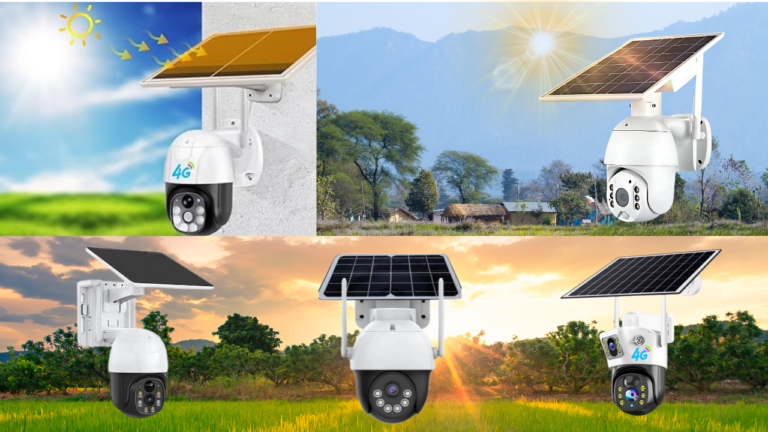
Solar powered security cameras rely on two energy sources — solar panels and rechargeable batteries . Panels convert sunlight into DC power stored in lithium-ion or gel batteries.
During sunny hours, the camera runs on solar energy; at night or on cloudy days, it automatically switches to battery mode to stay active.
For optimal performance, panels need about 4–6 hours of direct sunlight daily. Newer high-efficiency panels and improved battery technology maintain operation even in shaded or low-light areas. This independence makes solar cameras ideal for farms, construction sites, wildlife zones, and rural cabins.
Battery Storage & Uptime in Challenging Conditions
High-quality systems use 5,000–8,000 mAh batteries, providing 1–3 days of backup without sunlight. Industrial-grade versions may include capacitors or hybrid modules for extra endurance.
To save power, solar cameras use AI-driven motion detection and event-triggered recording, activating only when movement occurs.
Top models can sustain 48–72 hours of operation on battery alone, maintaining stable performance through extended cloudy periods.
Performance During Cloudy Weather & Winter
While solar output naturally decreases in cloudy or cold conditions, strong battery backups ensure uninterrupted operation. Most cameras maintain motion detection and recording for up to three days with limited sunlight.
Premium units feature IP65–IP67 weatherproof housings to withstand rain, snow, dust, and freezing temperatures. Adjusting the solar panel’s tilt seasonally and using higher-capacity batteries further enhances winter efficiency. User tests show these systems remain dependable all year round, even in harsh climates.
Efficiency & Advanced Camera Features
Modern solar CCTV systems pair energy efficiency with smart functionality:
Smart tracking and AI analytics let one 4K PTZ camera cover the area of several fixed units.
Power-saving modes and scheduled recording extend battery life.
Some models automatically adjust brightness and frame rate to conserve energy in low light.
For best results, place panels in full sunlight. If shade is unavoidable, choose cameras with larger batteries and high-efficiency panels for consistent performance.
Key Takeaways: Performance Factors for Solar Security Cameras
Reliable power from solar and battery integration
1–3 days of backup power during low sunlight
IP65+ weatherproofing for rain, snow, and dust
Off-grid readiness for rural and remote sites
Reduced sunlight dependence through advanced PV and smart management
In Summary
Today’s solar powered security cameras offer strong resilience, energy autonomy, and continuous uptime. With improved batteries and durable housings, they deliver dependable off-grid surveillance across all seasons—proving that sustainable technology can truly meet modern security needs.
Ideal Use Cases for Solar Powered Security Cameras
A remote solar powered security camera is perfect for off-grid locations where electrical wiring is costly or impractical. Powered by solar panels and rechargeable batteries, it provides reliable day-and-night monitoring without depending on grid power—ideal for farms, construction sites, cabins, and wide outdoor areas needing wire-free coverage.
Where Solar Powered Security Cameras Excel
1. Remote and Off-Grid Properties
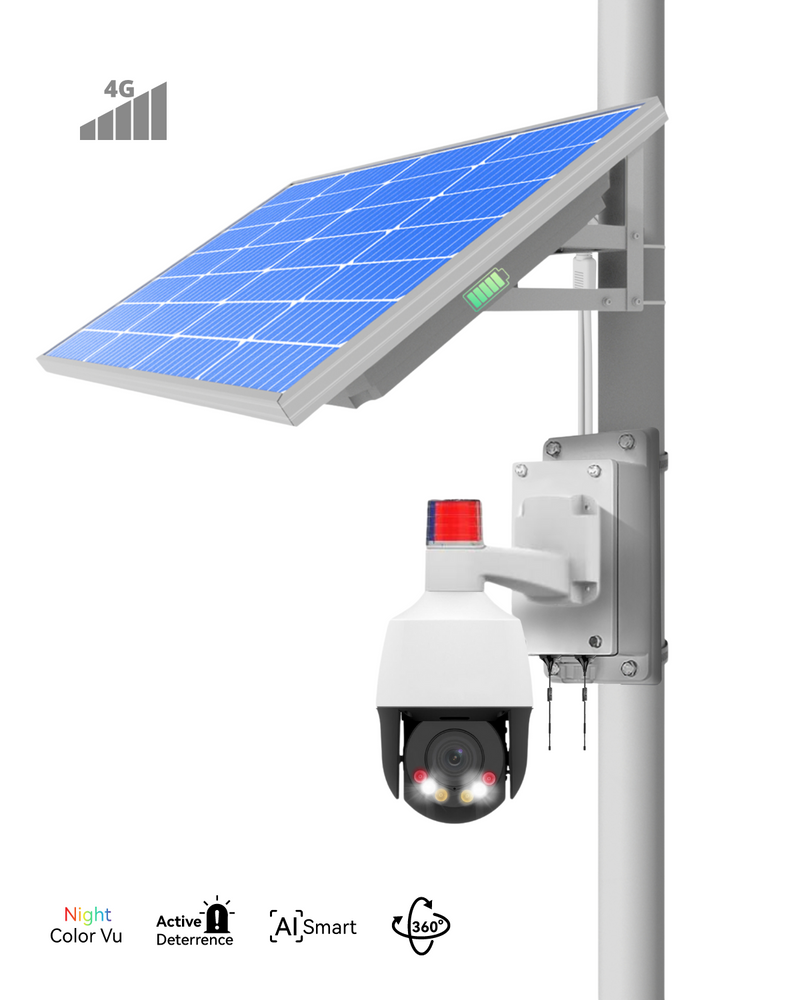
Rural areas such as farms, barns, and construction zones often lack stable power infrastructure. Solar security systems deliver 24/7 HD or 4K monitoring with motion detection and night vision—no wiring required.
Construction Sites: Portable solar cameras can be moved as projects progress, ensuring full coverage.
Agriculture: Weatherproof models safeguard equipment, livestock, and crops.
Cabins & Vacation Homes: Mobile app monitoring enables remote checks, reducing on-site visits.
2. Areas Without Nearby Power Outlets

Large estates, driveways, and parking lots often have blind spots far from power sources. Solar setups allow flexible placement wherever sunlight is available, eliminating underground wiring.
Driveways & Gates: Keep entrances visible and secure.
Outdoor Venues & Parks: Suitable for both temporary and long-term use, with no need for infrastructure upgrades.
Installation Simplicity & Maintenance Advantages
Easy Setup: Most systems are plug-and-play and install in under 30 minutes.
Wireless Connectivity: Wi-Fi or 4G/LTE links enable live alerts, two-way audio, and mobile access.
Low Maintenance: Solar panels automatically recharge batteries; most users spend less than an hour per year on upkeep.
Expandable Systems: Many hubs support up to eight cameras with options for 1TB storage or year-long local recording.
High Reliability: Built-in batteries keep cameras running during outages or storms.
Common Use Cases for Solar CCTV Systems
Monitoring construction sites and equipment yards beyond grid reach
Protecting barns, stables, and livestock from theft or predators
Checking off-grid cabins or rural homes remotely
Securing vehicles or storage in remote parking lots
Overseeing temporary venues, festivals, or outdoor events
Bottom Line
For areas without reliable electricity, solar-powered security cameras offer a smart, scalable, and eco-friendly solution. They combine a simple DIY setup, minimal maintenance, and flexible placement—expanding coverage without expensive infrastructure.
With improvements in battery life, weatherproofing, and wire-free design, these systems provide continuous visibility and peace of mind anywhere sunlight is available.
Choosing the Best Solar Powered Security Camera for Your Needs
Building a Reliable Solar Camera System
The performance of a solar powered security camera depends on three key factors: proper panel placement, reliable hardware, and regular maintenance. Choosing a system that matches your sunlight conditions, battery capacity, and property layout ensures steady operation and long service life.
When installed correctly, a solar-powered security camera delivers true off-grid reliability with minimal upkeep—offering energy independence, flexible placement, and sustainable protection for farms, construction sites, and remote areas where wiring is impractical.
That said, these systems may not be ideal for 24/7 continuous recording or locations with limited sunlight. Matching the right product to your specific environment and usage needs will give you the best balance of performance, cost-efficiency, and long-term dependability.

Looking for OEM Solar-Powered Security Cameras?
iCSeecam is a leading CCTV camera manufacturer in China, specializing in customized and OEM solar-powered security solutions for brands, distributors, and e-commerce sellers worldwide. Whether you need residential, commercial, or off-grid surveillance products, we can design and produce cameras tailored to your requirements.
Contact us today to explore reliable, high-performance solar-powered camera solutions built for your business.