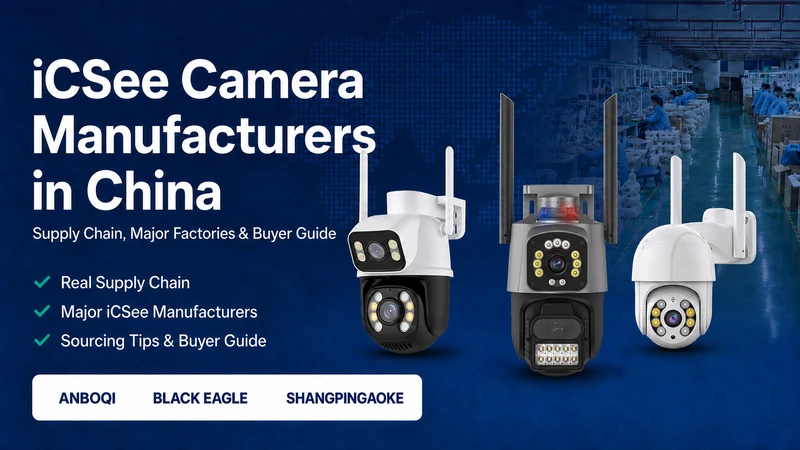
A common misconception among iCSee camera users is that all iCSee devices are made by a single manufacturer. When people search for an iCSee camera manufacturer, they often expect to find one company behind every iCSee camera on the market.
In reality, iCSee cameras are produced by multiple manufacturers within a broader supply chain built around the iCSee app and camera solutions.
iCSee is better understood as a camera ecosystem. Zhejiang JAIFY Co., Ltd. (commonly known in the industry as JFTech) develops the iCSee app and the underlying camera solutions, while multiple manufacturers in China turn those solutions into finished security cameras.
That distinction matters to buyers.
Two cameras can both work with the iCSee app, look almost identical, and advertise similar resolutions and features — yet differ significantly in component quality, production consistency, testing, reliability and price.
Based on our long-term sourcing experience in the iCSee camera supply chain, this guide explains:
- Who is behind the iCSee ecosystem
- How iCSee cameras are actually manufactured
- The major iCSee camera manufacturers we work with in China
- Why similar iCSee cameras can have very different quality
- What buyers should compare before choosing a factory
- When buying directly from a factory makes sense — and when a multi-factory supplier may be more practical
Quick Answer: Who Actually Makes iCSee Cameras?
iCSee cameras are not manufactured by a single company. The supply chain can be simplified into two major layers:
| Supply Chain Role | What They Do |
|---|---|
| Zhejiang JAIFY Co., Ltd. / JFTech | Develops the iCSee app and camera solutions, and supplies main control chips or camera mainboards used by downstream manufacturers |
| iCSee Camera Manufacturers | Turn these solutions into finished cameras through PCB production or assembly, component sourcing, housing integration, testing, quality control and packaging |
Zhejiang JAIFY Co., Ltd. (JFTech) is the official developer behind the iCSee app and provides core camera solutions used by downstream manufacturers. The finished cameras are then produced by multiple camera factories in China.
In the supply chain we work with, manufacturers typically follow one of two models:
- JFTech control chip → PCB/SMT and mainboard production → Component integration → Camera assembly → Testing and QC → Finished iCSee camera
- JFTech mainboard → Remaining components and housing → Camera assembly → Testing and QC → Finished iCSee camera
This is why different iCSee cameras can use the same app while coming from different manufacturers — and why their quality, components and pricing can vary.
Who Develops iCSee and Powers the iCSee Camera Ecosystem?
Zhejiang JAIFY Co., Ltd. / JFTech
JFTech sits upstream in the iCSee camera supply chain rather than operating simply as a finished-camera manufacturer. Its role covers both the iCSee software ecosystem and the core camera solutions used by downstream manufacturers.
Based on our supply-chain cooperation, JFTech provides core elements such as:
- The iCSee app
- Main control chips
- Camera mainboards
- Camera hardware and firmware solutions required to implement camera functions
Downstream camera manufacturers then turn these components and solutions into finished products.
In simple terms: JFTech develops the iCSee camera solution. iCSee camera factories manufacture the physical cameras.
This distinction explains why there can be many different iCSee camera models on the market without all of them coming from the same factory.
How Are iCSee Cameras Actually Manufactured?
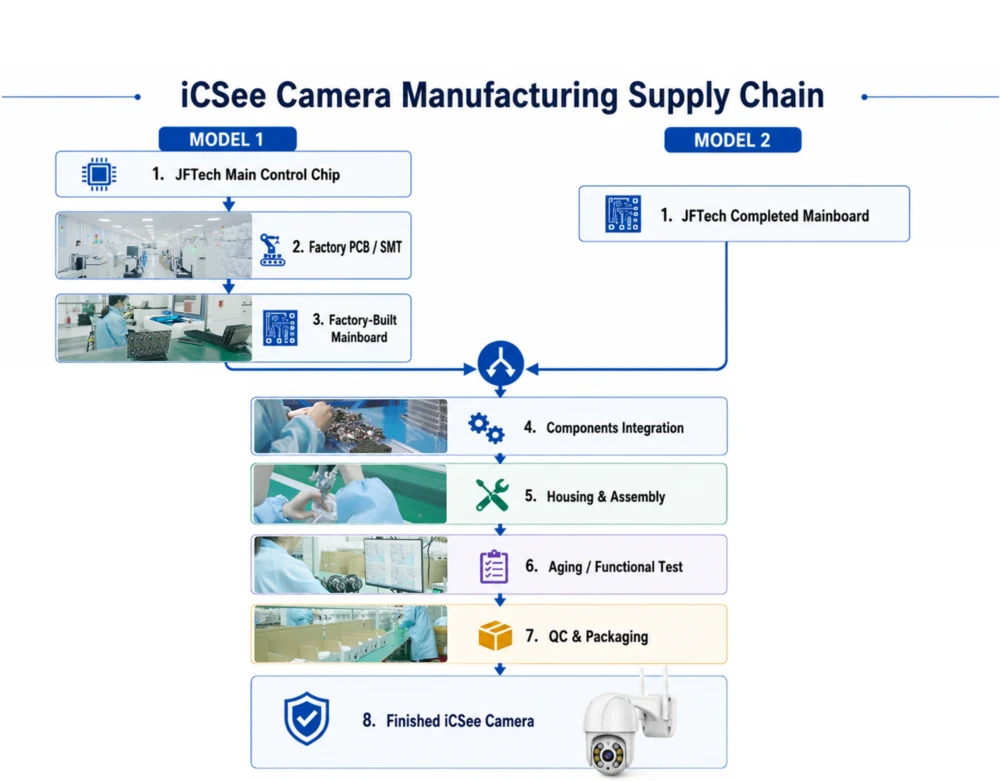
In the iCSee supply chain we work with, manufacturers generally follow two production models.
Model 1: Starting With the JFTech Control Chip
JFTech supplies the main control chip, while the camera manufacturer builds the mainboard and completes the remaining production process.
JFTech Control Chip → PCB/SMT & Mainboard Production → Component Integration → Housing & Assembly → Testing & QC → Finished iCSee Camera
Shenzhen Anboqi Technology Co., Ltd., for example, uses this model for many of its iCSee cameras.
Model 2: Starting With a JFTech Mainboard
Other manufacturers purchase a completed JFTech mainboard with the control chip already integrated, then complete the remaining hardware integration and production.
JFTech Mainboard → Component Integration → Housing & Assembly → Testing & QC → Finished iCSee Camera
In both models, the finished camera still depends heavily on the manufacturer’s component choices, production experience and quality control. This is why iCSee cameras with similar appearance and specifications can still differ significantly in quality, consistency and price.
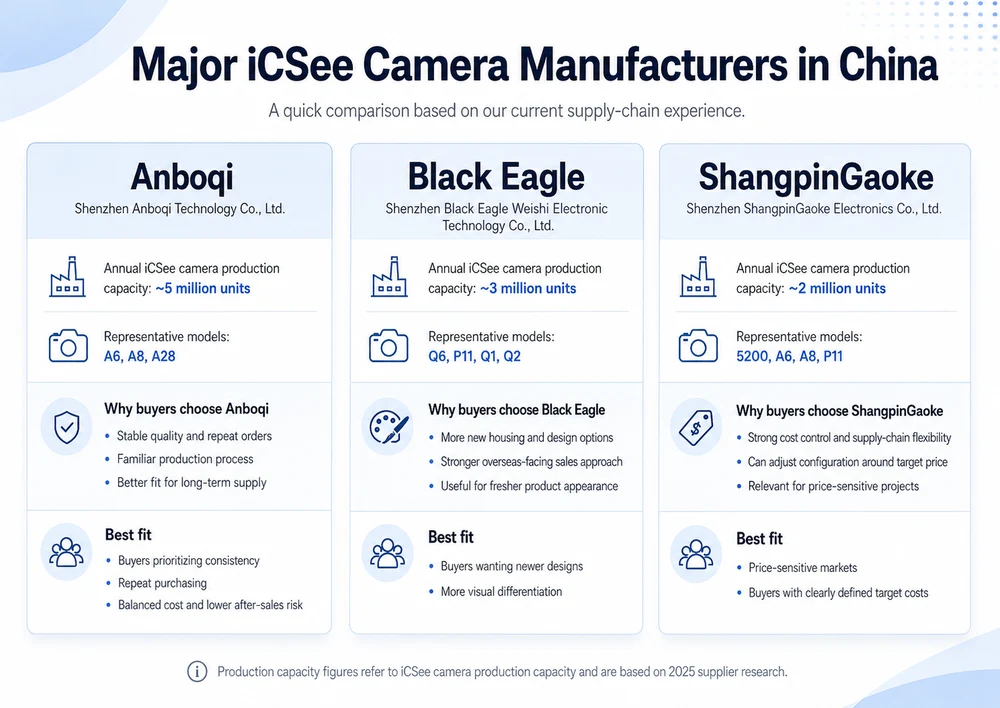
Major iCSee Camera Manufacturers in China
Based on our long-term sourcing experience and 2025 supplier research, three manufacturers are particularly relevant in the iCSee camera supply chain we work with:
- Shenzhen Anboqi Technology Co., Ltd.
- Shenzhen Black Eagle Weishi Electronic Technology Co., Ltd.
- Shenzhen ShangpinGaoke Electronics Co., Ltd.
| Manufacturer | Annual iCSee Camera Production Capacity* | Representative Models | Main Strength | Main Markets |
|---|---|---|---|---|
| Anboqi | ~5 million units | A6, A8, A28 | Quality consistency and stable supply | South America, Russia |
| Black Eagle | ~3 million units | Q6, P11, Q1, Q2 | More frequent new housing/design options | South America |
| ShangpinGaoke | ~2 million units | 5200, A6, A8, P11 | Aggressive pricing | South America, Russia |
* Annual production capacity figures were confirmed directly with the manufacturers during our 2025 supplier research and refer specifically to iCSee camera production capacity, not annual shipments or sales.
These factories should not simply be ranked from “best” to “worst.” They serve different buying priorities.
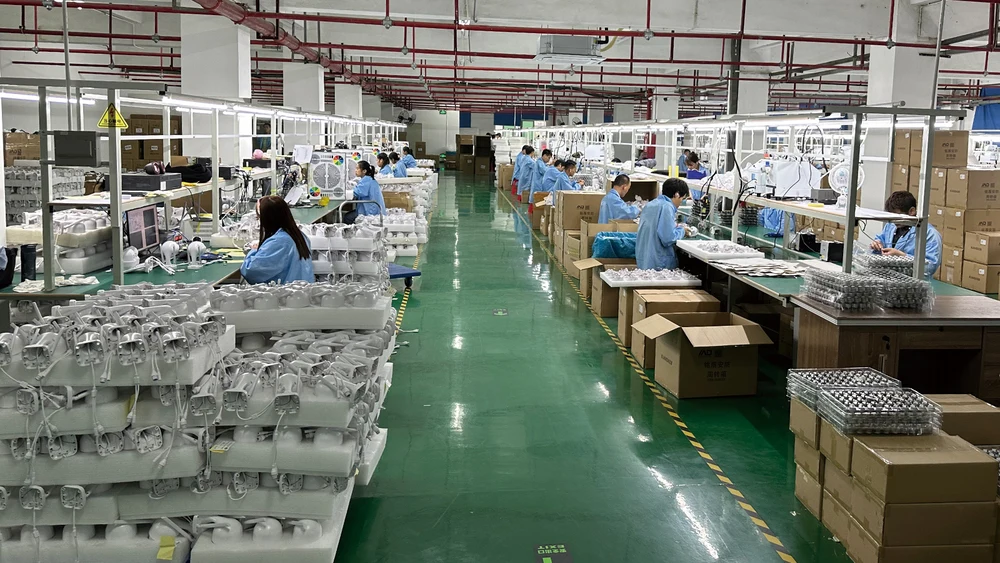
1. Shenzhen Anboqi Technology Co., Ltd.
Shenzhen Anboqi Technology Co., Ltd. is our primary manufacturing partner for iCSee cameras.
Its product range includes established models such as the A6, A8 and A28, with an annual iCSee camera production capacity of approximately 5 million units.
Why Buyers Choose Anboqi
From our sourcing experience, Anboqi’s main advantage is not that it always offers the newest design or lowest price. Its advantage is consistency.
We have found the factory particularly strong in:
- Stable product quality
- Relatively consistent repeat orders
- Familiar and established production processes
- Stock availability for selected popular models
- Better suitability for customers making repeat purchases
Anboqi also manufactures more deeply within the supply chain by purchasing JFTech main control chips and completing PCB/SMT and finished-camera production itself. This gives the factory greater involvement in the hardware production process than manufacturers relying primarily on finished mainboards.
What to Keep in Mind
The trade-off is that Anboqi’s product updates can be relatively slow. For buyers whose priority is constantly launching cameras with new housings or visual designs, other factories may sometimes react faster.
Best Fit
Anboqi is generally our preferred starting point for customers who prioritize:
- Stable repeat purchasing
- Fewer quality fluctuations
- Established camera models
- Long-term supply
- A balance between price and after-sales risk
Examples include the iCSee A8 PTZ WiFi Camera and A28 Dual-Lens WiFi Camera.
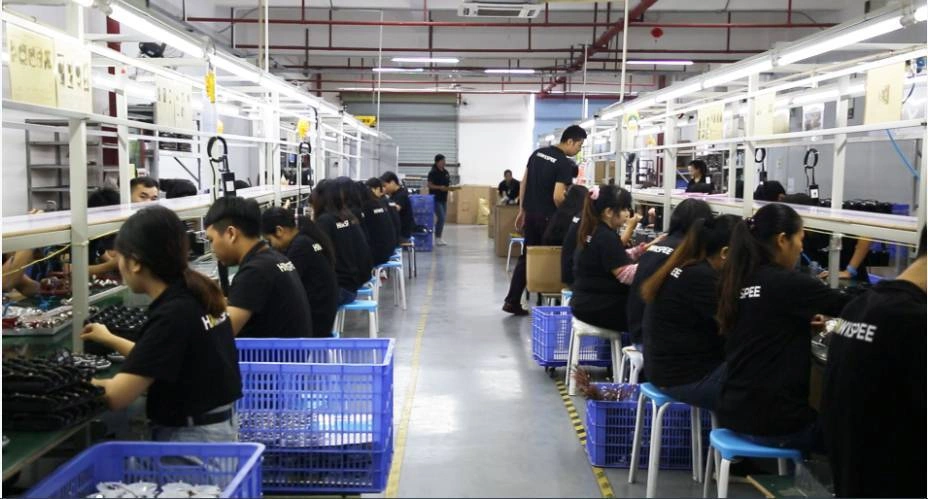
2. Shenzhen Black Eagle Weishi Electronic Technology Co., Ltd.
Black Eagle is another established iCSee camera manufacturer, with an annual iCSee camera production capacity of approximately 3 million units.
Representative models include: Q6, P11, Q1 and Q2.
Unlike many traditional iCSee factories that primarily depend on domestic export companies for international business, Black Eagle has its own foreign trade team and has invested more effort in overseas-facing marketing.
Why Buyers Choose Black Eagle
Its most obvious advantage in our supplier comparisons is product appearance and housing development.
Black Eagle tends to offer more new housings and design options. This can make it useful for buyers who want:
- A fresher product appearance
- More visual differentiation
- Newer enclosure designs
- Additional options when established models are becoming too common in the market
What to Keep in Mind
In our sourcing comparisons, Black Eagle is not always the most price-competitive option. Sales support can also vary depending on the project.
For customers whose primary requirement is simply the lowest possible landed product cost, other manufacturers may therefore be considered first.
Best Fit
Black Eagle is worth evaluating when product appearance and new housing options are more important than reaching the lowest possible factory price.
3. Shenzhen ShangpinGaoke Electronics Co., Ltd.
Shenzhen ShangpinGaoke Electronics Co., Ltd. is a traditional iCSee camera manufacturer that primarily works through Chinese export companies and supply-chain partners.
Its annual iCSee camera production capacity is approximately 2 million units. Representative models include: 5200, A6, A8 and P11.
Why Buyers Choose ShangpinGaoke
One of ShangpinGaoke’s main strengths is its cost control and supply-chain flexibility.
The factory has strong control over component sourcing and product configuration, which allows it to adjust specifications and costs according to different customer requirements.
For buyers working with a strict target price, ShangpinGaoke can often offer a configuration that balances the required functions with a more competitive purchase cost.
This makes it particularly relevant for:
- Price-sensitive markets
- Buyers with clearly defined target costs
- Mature camera models with established specifications
- Projects where cost control is a major purchasing factor
What to Keep in Mind
When working with ShangpinGaoke, the key is to define the required product standard clearly rather than focusing only on pushing the factory price lower.
Because the factory can adjust components and configurations to meet different price targets, buyers should confirm important quality requirements such as:
- Component specifications
- Motor quality
- Image performance
- Product consistency
- Testing requirements
A lower target price may require changes in component selection or product configuration, so samples and production specifications should be verified before placing larger orders.
In our experience, ShangpinGaoke can produce products at different quality levels. The final result depends heavily on how clearly the buyer defines the required performance, quality standard and target cost.
Why Do Some iCSee Cameras Look the Same but Perform So Differently?
This is one of the most misunderstood parts of the iCSee market.
Two cameras may have:
√ The same iCSee app
√ Nearly identical housings
√ The same advertised resolution
√ Similar PTZ functions
√ Similar night-vision claims
and still perform very differently after shipment. Why? Because the app represents only one layer of the product.
1. Component Quality Can Be Different
Factories can make different choices for components such as:
- Image sensors
- Storage-related components
- Motors
- Antennas
- Speakers and microphones
- Housing materials
- Other supporting electronics
These differences are not always obvious from a product photo or specification sheet.
2. Even the Housing Can Be Different
Two cameras can look almost identical while using housings with different:
- Material thickness
- Fit
- Component fixing points
- Weather resistance
- Mold quality
Small differences can become significant after the product is exposed to outdoor temperatures, vibration or repeated PTZ movement.
3. QC Procedures Are Not the Same
Factories also differ in how seriously they perform:
- Aging tests
- Functional tests
- PTZ tests
- Connection tests
- Image checks
- Final inspection
A camera passing through a more complete testing process will usually cost more than a product assembled primarily to meet the lowest target price.
4. Manufacturing Experience Matters
Production experience is difficult to see on a specification sheet. A factory that has produced the same model over many batches may already know:
- Which components fail most frequently
- Which assembly points need reinforcement
- Which suppliers create consistency problems
- What should be checked before shipment
This is one reason we do not evaluate cameras only by appearance and specifications.
Same App + Similar Appearance + Similar Specifications ≠ Same Product Quality
What Should Buyers Watch Out for When Sourcing iCSee Cameras?
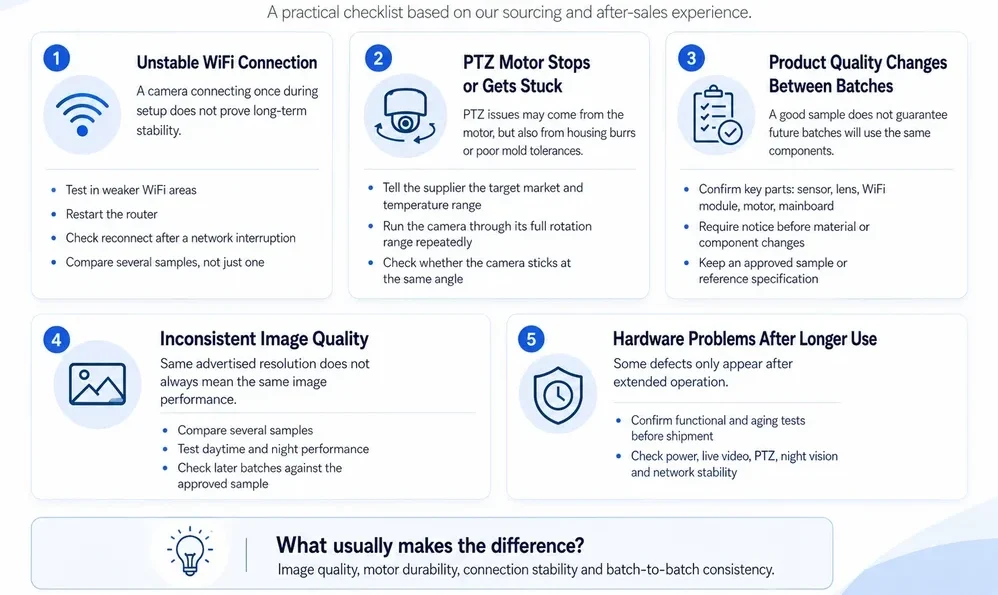
Based on our sourcing and after-sales experience, the following problems appear repeatedly in iCSee camera orders. Most are difficult to identify from product photos or specifications alone, so they should be checked during sample approval and production.
Unstable WiFi Connection
Some cameras connect normally during setup but become unstable under weaker WiFi conditions or fail to reconnect after a network interruption.
When testing samples, try them away from the router, restart the router, temporarily disconnect the internet, and check whether the camera reconnects automatically.
PTZ Motor Stops or Gets Stuck
PTZ problems can come from the motor itself, but not always.
Low temperatures may affect motor performance, so buyers should tell the supplier the target market and expected operating temperature before confirming the model.
Housing burrs or poor mold tolerances can also block PTZ movement. Run the camera repeatedly through its full rotation range during sample testing.
Product Quality Changes Between Batches
A good sample does not guarantee that future orders will use exactly the same components.
For repeat orders, confirm key components such as the sensor, lens, WiFi module, motor and mainboard, and require the supplier to notify you before making material or component changes.
Keeping an approved sample or confirmed specification also makes later batch comparisons easier.
Inconsistent Image Quality
Two cameras with the same advertised resolution can still produce noticeably different images.
Compare several samples under both daytime and night conditions, and for repeat orders, check random production units against the originally approved sample.
Hardware Problems That Only Appear After Longer Use
Power, PTZ, connection or other functional problems may not appear during a quick inspection.
Before shipment, confirm that the factory performs basic functional and aging tests covering power, network connection, PTZ, live video, night vision and other key functions.
From our experience, the biggest differences between iCSee factories often appear in image quality, motor durability, connection stability and batch-to-batch consistency.
Real Sourcing Case: When a Lower Price Created a Higher After-Sales Cost
In August 2025, a Russian customer ordered 256 outdoor PTZ iCSee cameras.
We initially recommended a more established model, but the customer wanted a lower price, so we selected a visually similar alternative from another factory.
After shipment, the after-sales rate was noticeably higher than normal. Two problems stood out:
- PTZ motors performed poorly in the local cold environment
- Antennas became loose because the housing fixing point was not secure enough
The housing mold was later adjusted, and the antenna problem did not reappear in subsequent production.
The motor issue also changed how we select products for colder markets. We now pay more attention to the target country’s operating environment instead of matching products mainly by features and price.
The factory provided limited support for the units already shipped, so ICSEECAM covered the customer’s local after-sales costs in Russia.
The lesson was simple: The lowest factory price is not always the lowest sourcing cost.
Product returns, local repairs, customer complaints and repeat-order risks can quickly outweigh a small saving in the original purchase price.
How to Choose the Right iCSee Camera Manufacturer
There is no single “best” iCSee camera manufacturer.
The right factory depends on the specific product, target market, price requirement and expected quality level.
Based on the manufacturers we currently work with:
| Manufacturer We Would Usually Evaluate First | Buyer Priority |
| Anboqi | Stable quality and repeat orders |
| Black Eagle | More new housing and design options |
| ShangpinGaoke | Competitive target pricing |
This is only a starting point. For example, a lower-cost model may work well in one market but be unsuitable for another because of climate, expected usage or after-sales requirements.
For this reason, we normally evaluate the product and customer requirement first, rather than choosing a factory only by company name.
Should You Buy Directly From a Factory or Work With a Multi-Factory Supplier?
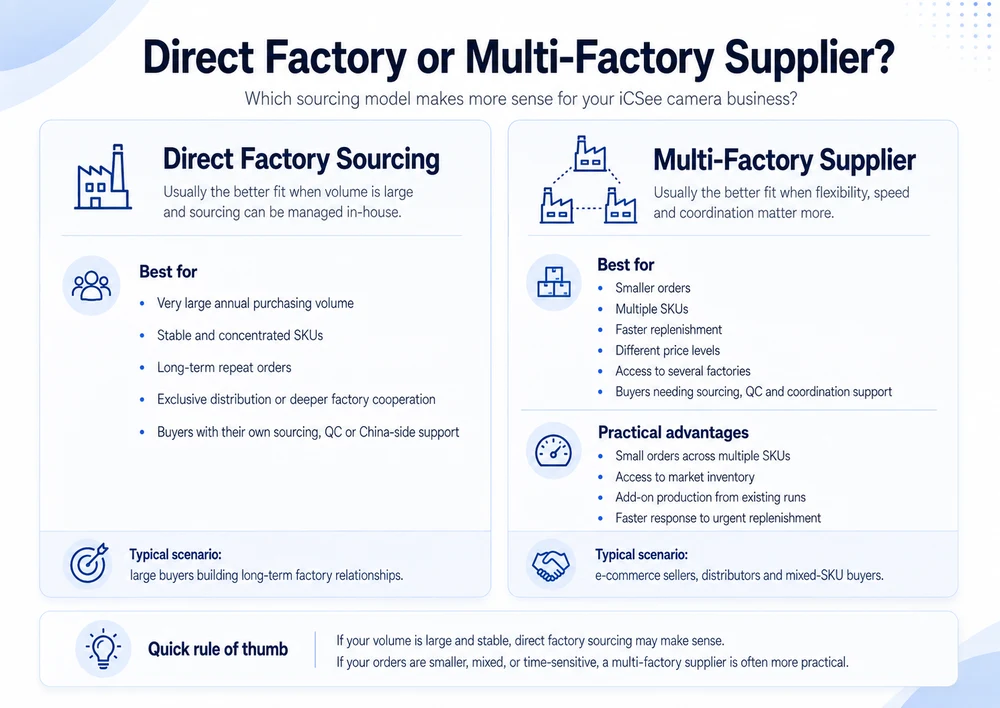
Both models can make sense. The better choice depends mainly on your order size, SKU structure and how much sourcing work you want to manage yourself.
When Direct Factory Sourcing Makes Sense
Buying directly from a factory is usually more suitable when you have:
- Very large annual purchasing volume
- Stable and concentrated SKUs
- Long-term repeat orders
- Exclusive distribution or deeper cooperation requirements
- Your own sourcing, QC or China-side support
For example, a buyer purchasing around 1 million cameras per year may benefit from visiting the factory directly, meeting the decision-makers and negotiating long-term supply or exclusivity.
Many traditional iCSee factories still have limited overseas sales capability, so large buyers may also need their own interpreter, sourcing team or China representative.
When a Multi-Factory Supplier Makes More Sense
A multi-factory supplier is usually more practical when you need:
- Smaller orders
- Multiple SKUs
- Faster replenishment
- Different price levels
- Access to several factories
- Help with sourcing, QC and coordination
Small Orders Across Multiple SKUs
An e-commerce seller or regional distributor may need several models, but only a small quantity of each. Those quantities may not meet each factory’s normal MOQ.
Because we work across multiple factories and local supply-chain companies, we can sometimes:
- Combine small quantities into larger production orders
- Source available market inventory
- Match different SKUs with different factories
- Consolidate everything into one shipment
Fast Replenishment
Factories normally produce according to existing order schedules and may not be willing to interrupt production for a small urgent order.
For urgent replenishment, we can look across the wider supply chain:
- Find a factory already producing the required model
- Add quantity to an existing production run
- Locate available stock in the local market
- Switch to another qualified supplier when necessary
This is especially useful for e-commerce sellers, where running out of stock can directly affect sales.
Where ICSEECAM Fits in the iCSee Supply Chain
ICSEECAM works with approximately 5–10 suppliers within the iCSee camera supply chain. Anboqi is our primary manufacturing partner, but we do not source every product from one factory.
Different customer requirements may lead us to different suppliers. Our supplier selection priorities are generally:
Quality stability → After-sales performance → Price → Delivery → Product development speed
Depending on the project, our work may include:
- Comparing different factories
- Sample testing
- Pre-shipment inspection
- OEM logo and packaging coordination
- Multi-SKU order consolidation
- After-sales coordination
This is particularly useful for:
- E-commerce sellers
- Regional distributors
- Smaller importers
- Multi-SKU buyers
- Buyers testing new products
- Customers requiring frequent replenishment
For deeper customization, see our OEM Security Camera Solutions. You can also browse our current iCSee camera range.
Need Help Selecting the Right iCSee Camera?
Choosing an iCSee camera is not only about resolution, lens count or price. The factory, components, target market, operating environment and expected after-sales performance all matter.
ICSEECAM can help compare suitable products and suppliers based on your:
- Target market
- Target price
- Product requirements
- Order quantity
- Quality expectations
- Replenishment needs
- OEM requirements
If you already know the model you need, we can help evaluate available supply options. If you are still comparing products, tell us your market, expected quantity and target price range.