Your electricity bill is already covered — so why is your security system still draining it? Solar powered home security cameras have come a long way from being a “nice experiment.” In 2026, the best models deliver real, dependable protection — without the wiring, without the hassle. In many cases, they make traditional wired systems feel unnecessarily complicated.
But the market is crowded. Dozens of solar security cameras promise “set-it-and-forget-it” performance. Pick the wrong one, and you’re dealing with blurry footage on cloudy days, batteries that die overnight, and a false sense of security — which can be worse than having no camera at all.
This guide cuts through the noise. We break down how solar powered home security cameras actually perform in real-world conditions, what they truly cost over time, the most common installation mistakes, and which models make sense for your specific setup — plus where solar still falls short.
How to Choose the Best Solar Powered Home Security Cameras (3-Step Quick Guide)

Three simple questions stand between choosing the right system — or wasting money on the wrong one. When it comes to solar powered home security cameras, your decision comes down to power, coverage, and long-term cost.
Step 1: Match Your Power Setup
No nearby outlet (renters / flexible install) → Go fully wireless with a built-in panel. The Eufy SoloCam S340 combines a high-capacity battery, integrated solar panel, and local storage — no wiring, no subscription.
Homeowners or off-grid setups → A detachable solar panel gives you better positioning for sunlight. Cameras from Reolink or Blink allow flexible panel placement for more consistent charging.
Reality check: Most solar security cameras need 4–6 hours of direct sunlight per day to maintain near 24/7 operation. Less than that, and you’ll rely on battery backup.
Step 2: Match Coverage Size
Small areas (front door, porch, driveway) → Fixed-lens cameras with ~120–140° field of view are enough.
Large areas (backyard, farm, open space) → Go with PTZ (pan-tilt-zoom) or wide-angle models. Cameras like the Reolink Argus PT series or Eufy dual-lens models can cover significantly more ground than fixed cameras.
Step 3: Check These Key Performance Benchmarks
Before buying any solar powered home camera, make sure it meets these minimum standards:
Resolution: 2K is the baseline. For faces or license plates beyond ~30–50 ft, 4K is noticeably better.
Weatherproofing: IP65 or higher is essential for outdoor durability
AI Detection: Look for on-device AI (person/vehicle detection) to reduce false alerts by up to 80–90%
Quick Recommendations by User Type
User Type | Best Pick | Price |
|---|---|---|
Renter | Eufy SoloCam S340 | $150–200 |
Budget buyer | TP-Link Tapo C460 | $80–120 |
Rural / PTZ | Reolink Argus PT Ultra | $130–160 |
Off-grid pro | Eufy eufyCam S3 Pro | $400–500 |
Best Solar Powered Home Security Cameras of 2026 (Top Picks Reviewed)
Not every camera that looks good on paper holds up in the real world. The best solar powered home security cameras of 2026 earned their place here for one reason: they work — in real sunlight, real weather, and real-world conditions.
These picks aren’t based on spec sheets alone. They reflect actual performance, long-term reliability, and what users consistently report after months of use.
Here’s what made the cut.
Eufy SoloCam S340 — Best Overall
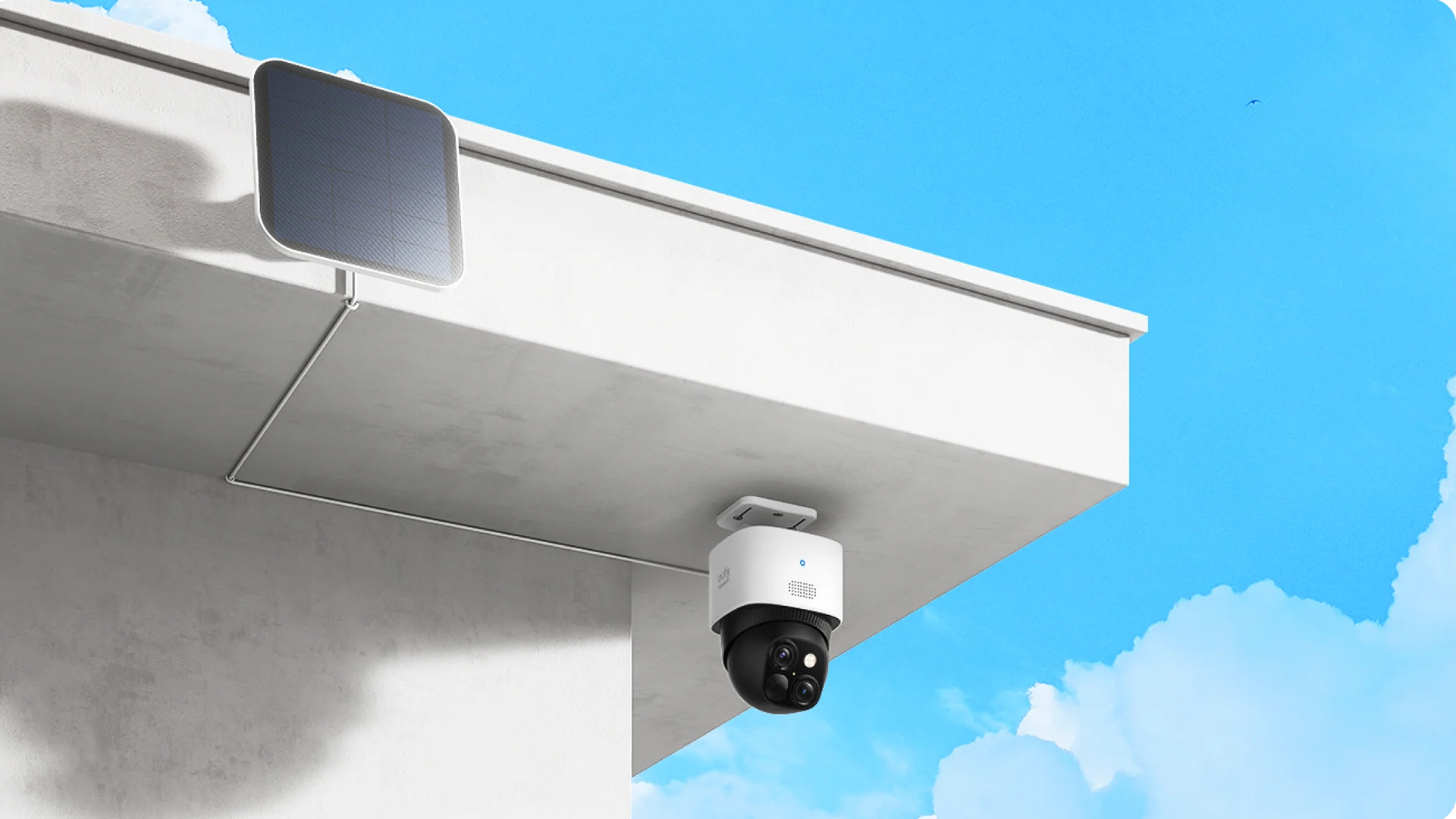
If you want one camera that does almost everything right, this is it.
The S340 combines a dual-lens system with full 360° PTZ coverage. You get both wide-angle visibility and zoomed-in detail — effectively replacing two cameras with one. Image quality is sharp even at a distance, and motion tracking is fast and accurate.
The built-in solar panel keeps the battery topped off with minimal effort, and everything runs locally. No subscription. No cloud dependency. No ongoing cost just to access your own footage.
For most homeowners, this is the most complete solar powered security camera you can buy in 2026.
Reolink Argus PT Ultra — Best for Large Areas
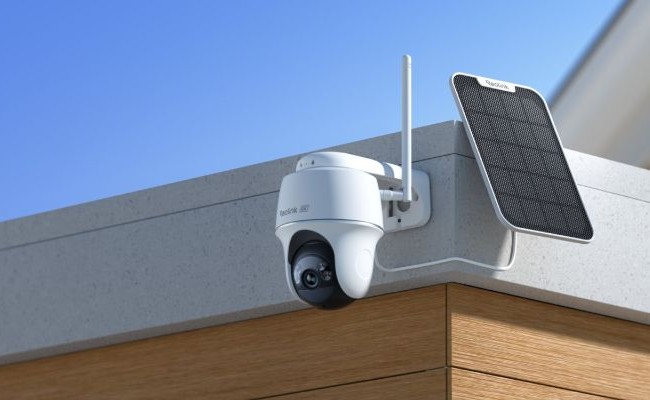
Coverage is where this camera stands out.
With 355° pan and 140° tilt, the Argus PT Ultra can monitor large outdoor spaces that would normally require multiple fixed cameras. The 4K resolution holds detail even across wider areas — something most 2K cameras struggle with.
Pair it with a detachable solar panel, and it becomes a reliable long-term solution for backyards, farms, or remote properties.
If your priority is maximum coverage with minimal blind spots, this is the one to beat.
TP-Link Tapo C460 — Best Value for Money

This is where price and performance meet.
The Tapo C460 delivers 4K resolution, strong battery life, and solid AI detection at a noticeably lower price than most competitors. Solar charging is efficient — often needing less daily sunlight than comparable models.
It also gives you flexibility: local storage is free, and cloud storage is optional. That makes it ideal for buyers who want to keep costs down without sacrificing core features.
If you’re looking for the best bang for your buck, this is it.
AOSU SolarCam Series — Best Budget PTZ

Affordable doesn’t have to mean limited.
AOSU’s solar cameras offer full 360° pan-and-tilt coverage, solid 2K video, and reliable AI detection — all at a budget-friendly price point. For users who want flexible coverage without spending $150+, this is one of the few options that actually delivers.
It’s not the most powerful camera on this list, but it covers far more ground than typical entry-level models.
Ring Spotlight Cam Plus Solar — Best for Smart Home Integration
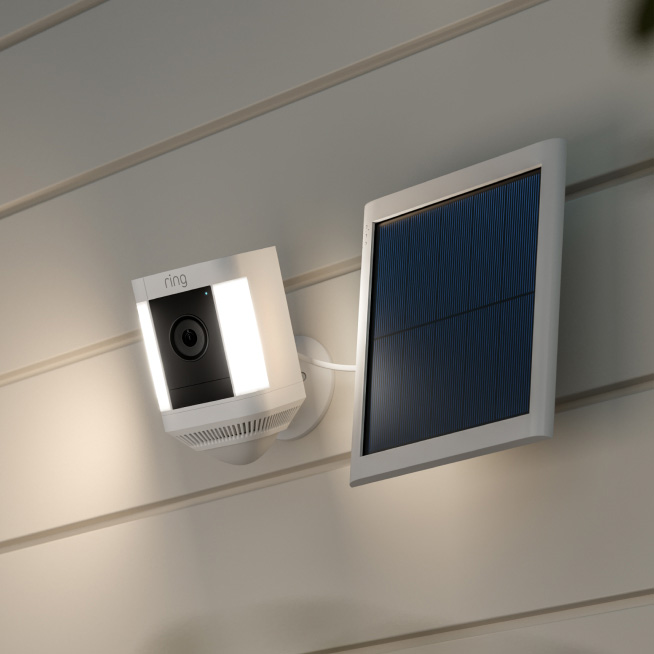
This is where ecosystem matters.
Ring’s Spotlight Cam isn’t the cheapest long-term option (subscription required for full features), but it integrates seamlessly with Alexa and other smart home devices. Setup is simple, the app is polished, and alerts are reliable.
If you’re already using smart home products and want everything connected in one place, this is a strong choice — even with the ongoing cost.
Notable Mentions
Arlo Essential Solar — strong performance with flexible solar add-ons, but subscription required for full features
Lorex Solar Cameras — excellent 4K options with local storage support
ADT + Google Nest — best for professional monitoring and full security systems
Every camera above meets the 2026 baseline for solar powered home security cameras:
IP65+ weather resistance, reliable solar charging, and AI detection that minimizes false alerts.
The difference comes down to what matters most to you — coverage, cost, or ecosystem.
Solar Powered Home Security Cameras Comparison Table (2026 Side-by-Side)
Too many specs, not enough clarity — that’s the problem with most comparison charts.
This one focuses only on what actually matters when choosing solar powered home security cameras: real battery performance, solar efficiency, storage, and long-term value.
Here’s the breakdown.
2026 Comparison Table
Model | Resolution | Battery Life | Solar Panel | Storage | Price | Best For |
|---|---|---|---|---|---|---|
3K dual-lens | Continuous (solar) | Integrated | 8GB local | $150–200 | Best overall (no subscription) | |
4K | Continuous (solar) | 3W detachable | microSD/local | $130–160 | Large areas / PTZ coverage | |
TP-Link Tapo C460 | 4K | Up to 200 days | External solar | Local + optional cloud | $80–120 | Best value |
Eufy eufyCam S3 Pro | 4K | Continuous | Integrated | Up to 16TB local | $400–550 | Off-grid / long-term storage |
Ring Spotlight Cam Plus Solar | 1080p | ~6 months | Detachable | Cloud (subscription) | $150–200 | Smart home integration |
Arlo Essential Solar | 2K | 3–6 months | External | Cloud + SD | $130–250 | Easy DIY setup |
Lorex Solar 4K Spotlight | 4K | ~6 months | Detachable | Local + cloud | $150–300 | High-resolution recording |
AOSU SolarCam PTZ | 2K | Continuous (solar) | External | Local | $80–120 | Budget PTZ |
ADT Solar + Nest Cam | 1080p | Continuous | Integrated | Cloud | $200+ | Pro monitoring ecosystem |
SimpliSafe Solar Kit | 1080p | Continuous | Compatible panel | Cloud/base | $170+ | Easy setup |
What These Numbers Actually Mean
Specs don’t tell the full story — here’s how to read them when comparing solar powered security cameras:
Resolution
1080p → fine for short-range monitoring
2K → minimum for driveways and entry points
4K → best for identifying faces or license plates at a distance
Brands like Reolink and Eufy lead here.
Solar Panel Output
Most cameras fall in the 2.5W–3.5W range
With 2–4 hours of direct sunlight, higher-end models can run continuously
Efficiency matters more than raw wattage.
Storage Options
Local storage (no subscription): Eufy, Reolink, Tapo
Cloud-based (subscription): Ring, Arlo
Local storage = lower long-term cost
Cloud = better remote access + backup
Connectivity
Connection Type | Best For |
|---|---|
WiFi | Standard homes with stable internet |
Cellular (4G/LTE) | Remote areas, farms, no-WiFi zones |
Some models from Reolink and Eufy offer LTE versions for off-grid use.
Solar Powered Home Security Cameras Cost Breakdown (3-Year Real Cost)
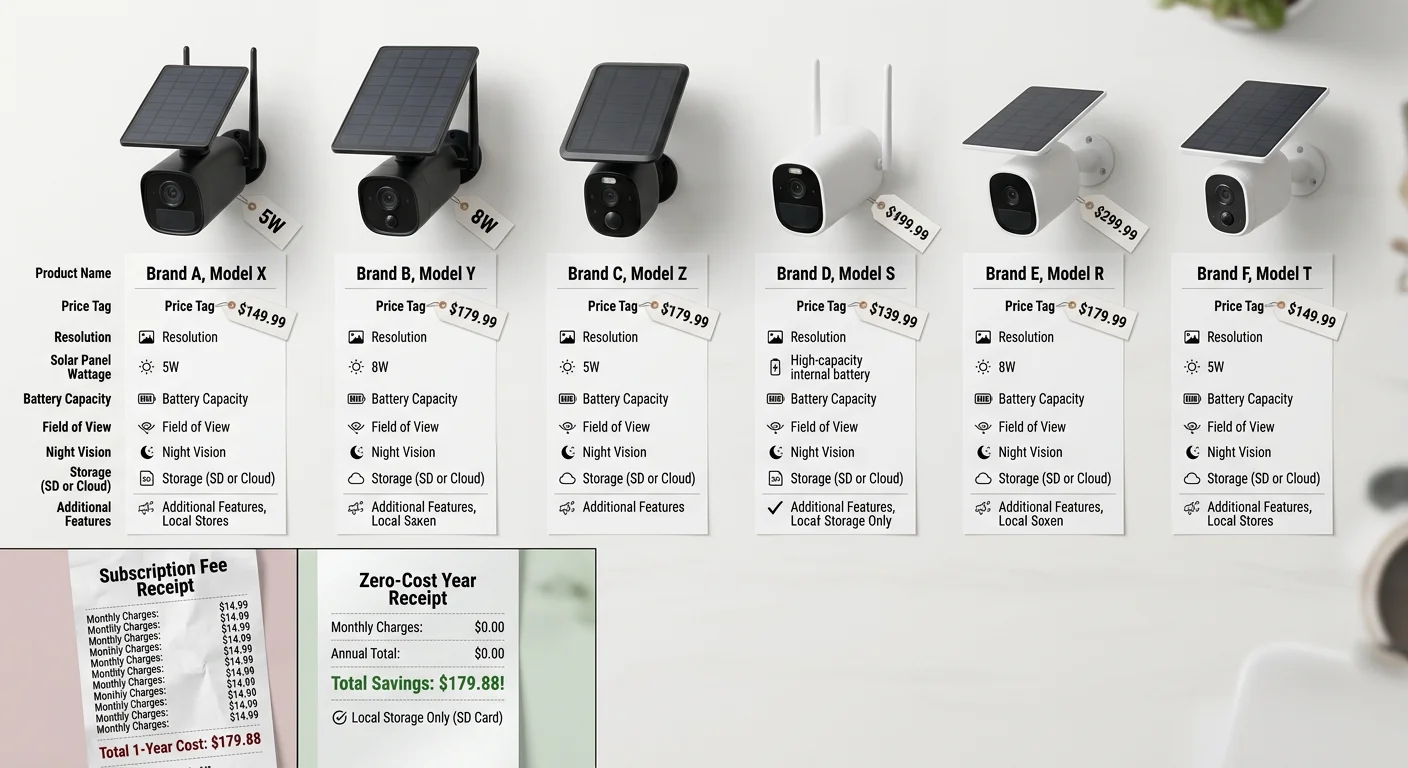
The real cost of solar powered home cameras isn’t the price on Amazon — it’s what you pay over time.
Most buyers focus on hardware. But in reality, subscription fees often become the biggest expense within 2–3 years.
Here’s what the actual 3-year ownership cost looks like in 2026.
3-Year Total Cost Comparison (Real-World Breakdown)
Setup Type | Example Models | Upfront Cost | 3-Year Subscription | Maintenance | Total Cost |
|---|---|---|---|---|---|
No-Subscription Solar | Eufy, Reolink, TP-Link | $120–$180 | $0 | ~$50 | $170–$230 |
Subscription-Based Solar | Ring, Arlo | $150–$220 | $450–$800 | ~$100 | $700–$1,100 |
Pro Security Ecosystem | ADT / SimpliSafe | $200+ | $300–$900 | ~$100 | $600–$1,200 |
What This Actually Means in Real Life
Subscription costs add up faster than hardware
Most solar powered home security cameras charge:
$3–$5/month (basic cloud storage)
$10–$25/month (AI + video history + multi-device support)
Over 36 months, that equals:
$432 – $900 in extra cost per camera
That’s often 3–5× the price of the camera itself
No-subscription models dominate long-term value
Brands like Eufy, Reolink, and TP-Link eliminate recurring fees by using:
Local SD storage
On-device AI processing
Solar-assisted continuous power
Result: near-zero ongoing cost after purchase
When subscription actually makes sense
Subscription-based systems like Ring or Arlo are worth it only if you need:
Professional monitoring (24/7 response services)
Cloud backup for all footage
Deep smart-home integration (Alexa / Google ecosystem)
Otherwise, the long-term math strongly favors no-subscription systems.
Key Insight (2026 Market Reality)
Over 3 years:
No-subscription solar cameras cost ~70% less
Subscription models become the most expensive option in home security
The gap is not marginal — it’s structural
Do Solar Powered Home Security Cameras Work? (Real-World Performance)

Short answer: yes — but only when installed correctly and matched to the right environment.
Modern solar powered home security cameras in 2026 are no longer experimental devices. In real-world conditions, high-quality models consistently achieve strong uptime and reliable performance — but their effectiveness depends heavily on sunlight exposure, battery capacity, and placement.
Real-World Performance (What Actually Happens)
In well-sunlit environments (suburban homes, driveways, open yards), premium solar security cameras typically maintain 90%+ operational uptime. The solar panel continuously recharges the internal battery during the day, enabling:
24/7 motion detection
Real-time live streaming
Instant mobile alerts
Two-way audio communication
No manual charging is required in these conditions.
Field Performance Across Real Installations
Across widely documented user reports and long-term reviews (including construction sites, rural properties, and multi-unit residential setups), solar cameras consistently perform best in off-grid or semi-off-grid environments.
For example:
Reputable off-grid deployments (e.g., Reolink and Eufy systems) show stable recovery after multiple overcast days
Extended low-sunlight periods typically reduce battery levels, but 2–3 days of normal sunlight restore full charge capacity
Lower-end or generic Amazon brands tend to experience slower recovery and higher downtime during winter conditions
The key difference is not whether solar works — but how efficiently the system manages low-light recovery.
Where Solar Powered Home Security Cameras Face Limitations
Despite strong performance, there are important constraints:
Weather Dependency
Cloudy climates, winter months, and shaded installations can reduce solar efficiency by 30–60%. In these environments, high-capacity batteries (10,000mAh+) become essential.
Higher Initial Setup Cost
Compared to traditional battery cameras, solar powered home security cameras require:
Solar panel hardware
Larger internal battery systems
More robust mounting setups
This increases upfront cost, even though long-term costs are lower.
Installation Sensitivity
Performance depends heavily on placement:
South-facing exposure (Northern Hemisphere) is ideal
Obstructions like trees or roof shadows significantly reduce efficiency
Tilt angle directly impacts daily charging performance
A poorly positioned camera can underperform even if the hardware is premium.
Long-Term Reliability (5–10 Year Perspective)
High-quality solar security cameras typically last 5–10 years, with:
Battery replacement every 3–5 years
Minimal maintenance compared to wired systems
No dependency on electrical wiring or power outages
Battery-only cameras, in contrast, require frequent manual charging or replacement cycles.
Final Reality Check
Solar powered security outdoor cameras are not “set-and-forget in every environment, but in properly installed setups, they are:
Highly reliable
Low-maintenance
More resilient in remote or off-grid locations than traditional systems
In 2026, they are no longer a compromise — they are often the more practical long-term solution, especially for outdoor residential security.
Common Problems with Solar Powered Home Security Cameras (And How to Fix Them)

Most issues with solar powered home security cameras are not hardware failures. In most cases, they come down to installation, sunlight exposure, or configuration — and can be fixed in minutes.
Below are the most common real-world problems and how to solve them.
Power Issues (Camera Won’t Turn On)
Problem: The camera does not power on or appears completely offline.
Cause: Battery fully drained or not receiving a charge.
Fix:
Hold the reset button for 5–10 seconds
Charge via direct sunlight (6–8 hours) or USB-C (2–3 hours)
Confirm the LED indicator shows the charging status
This issue is most commonly reported in low-sunlight setups of solar powered home security cameras, especially during winter months.
Solar Charging Issues (Battery Not Charging Properly)
Problem: Battery level keeps dropping even during daylight.
Cause:
Insufficient sunlight exposure
Dirty or obstructed solar panel
Loose or misaligned cable connection
Fix:
Ensure at least 4–6 hours of direct sunlight daily
Clean the solar panel surface regularly
Reposition the panel to avoid shadows from trees or roofs
Test USB charging to isolate hardware vs panel issue
High-performance systems from brands like Reolink and Eufy recover faster under weak sunlight due to more efficient power management.
Low Sunlight / Cloudy Weather Drain
Problem: Battery drains faster on cloudy days or in winter.
Cause: Reduced solar input + constant camera activity (motion detection + WiFi transmission)
Fix:
Relocate the camera to a higher-sun exposure area
Remove physical obstructions (trees, eaves, walls)
Upgrade to a higher-capacity battery (10,000mAh+)
Add a secondary solar panel for low-light regions
This is one of the most common limitations reported across solar powered security cameras in northern climates.
WiFi Connection Drops
Problem: Camera disconnects or live feed lags.
Cause: Weak WiFi signal or incorrect network pairing.
Fix:
Verify the WiFi password and reconnect the device
Restart the router and the camera app
Move the camera closer to the router or install a WiFi extender
Consider cellular-enabled models for remote areas
Most solar powered home security cameras rely on 2.4GHz WiFi, which has a limited range through walls and outdoor distances.
Motion Detection Issues
Problem: False alerts or missed motion events.
Cause: Incorrect sensitivity or poor camera angle.
Fix:
Adjust motion sensitivity in settings
Reposition the camera to face the target zone directly
Enable AI human/vehicle filtering
Restart the system after configuration changes
On-device AI systems in brands like Eufy and TP-Link significantly reduce false alerts compared to cloud-based systems.
No Video Feed / Black Screen
Problem: Live view is not loading or showing a black screen.
Cause: Low battery, poor WiFi, or lens obstruction.
Fix:
Check battery level first
Clean camera lens
Refresh live view in the app
Power cycle the device if needed
Storage Filling Too Quickly
Problem: Footage overwrites too fast, or storage runs out.
Cause: Continuous recording or default low storage settings.
Fix:
Increase SD card capacity (64GB–128GB recommended)
Adjust motion-only recording mode
Upgrade cloud storage plan if needed
Most solar powered home security cameras continuously capture motion events, which can fill storage faster than expected if not configured properly.
5 Installation Mistakes That Break Solar Powered Home Security Cameras

Most failures with solar powered home security cameras don’t come from bad hardware — they come from incorrect installation.
In fact, most performance issues (low battery, missed alerts, or offline cameras) can be traced back to just a few common setup mistakes.
Here are the five most critical ones — and how to fix them.
Mistake 1: Poor Solar Panel Placement (Insufficient Sunlight)
Why it fails:
Shade or incorrect direction reduces solar efficiency by 50–100%, preventing full daily recharge.
Fix:
Install in a south-facing direction (Northern Hemisphere)
Maintain a 30–45° tilt angle
Ensure at least 6 hours of direct sunlight per day
Even high-end solar powered security cameras like Eufy or Reolink will underperform if sunlight exposure is blocked.
Mistake 2: Installing Outside WiFi Range
Why it fails:
Weak signal causes delayed alerts, frozen live view, or complete disconnection.
Fix:
Test WiFi strength before mounting (target: stronger than -60 dBm)
Keep distance under 50–100 feet where possible
Add a WiFi extender for outdoor coverage
Most solar powered home security cameras rely on 2.4GHz WiFi, which has limited wall penetration.
Mistake 3: Incorrect Camera Height or Angle
Why it fails:
Wrong positioning reduces detection accuracy and recording usefulness.
Fix:
Mount height: 8–10 feet (ideal range)
Avoid mounting above 10 feet or below 8 feet
Keep the lens at least 2 feet away from the walls
Angle toward entry points (doors, gates, driveways)
Poor positioning leads to false alerts or missed motion events, even in premium systems.
Mistake 4: Weak or Unstable Mounting
Why it fails:
Wind vibration or loose screws gradually shift the camera angle, reducing coverage accuracy.
Fix:
Use weatherproof anchors and screws
Mount on solid structures (walls, eaves, brick)
Double-check tightness after installation
Avoid temporary adhesive-only mounts for outdoor setups
Mistake 5: Skipping Storage Setup Before Installation
Why it fails:
The camera records nothing or overwrites critical footage without warning.
Fix:
Insert the SD card before mounting (64GB–128GB recommended)
Configure cloud or local storage in-app indoors first
Verify recording works before final installation
This is one of the most common setup failures reported across solar powered home security cameras in real-world DIY installations.
Quick Installation Checklist (Avoid 90% of Failures)
Area | Common Mistake | Correct Setup |
|---|---|---|
Sunlight | Shade / wrong direction | 6+ hrs direct sun, 30–45° tilt |
WiFi | No signal testing | Pre-check above -60 dBm |
Angle | Too high / too low | 8–10 ft height, face entry points |
Mounting | Loose screws | Weatherproof anchors + solid surface |
Storage | Not configured | Set up SD/cloud before install |
Why This Matters (2026 Reality)
Across user reports and field feedback, most performance issues in solar powered security cameras are not product failures — they are installation failures.
When installed correctly, systems from brands like Reolink, Eufy, and TP-Link consistently achieve stable long-term performance with minimal maintenance.
Best Solar Powered Home Security Cameras for Different Scenarios

Not every property needs the same setup. The right solar powered home security cameras depend heavily on sunlight exposure, WiFi strength, and how large the area is that you want to monitor.
Below is a scenario-based breakdown using real-world performance logic — not just specs.
Front Yard or Porch (High Sun Exposure)
Best choice: Spotlight or
compact solar cameras
with strong AI detection
Ring Spotlight Cam Solar
Blink Outdoor + Solar Mount
Why this works:
Strong direct sunlight exposure supports stable charging
A wide-angle view is enough for doors and driveways
Motion-triggered alerts and spotlight act as deterrents
Ideal for homeowners who want simple, visible security at entry points.
Backyard or Shaded Areas
Best choice: High-efficiency battery + solar hybrid cameras
Eufy eufyCam 3 Series
Reolink Argus series (fixed or wide-angle models)
Why this works:
Works better in partial shade conditions
Larger internal battery compensates for inconsistent sunlight
Local storage reduces dependency on cloud connectivity
Best for backyards, gardens, and partially shaded residential areas.
Large Property or Open Space Coverage
Best choice: PTZ or wide-angle multi-view cameras
Reolink Argus PT / TrackMix series
Eufy SoloCam S340 (dual-lens PTZ model)
Why this works:
PTZ (pan-tilt-zoom) reduces blind spots
One camera can replace multiple fixed units
AI tracking improves coverage efficiency across wide areas
Best for large yards, farms, and multi-zone outdoor properties.
Gate or Driveway (High Motion Activity)
Best choice: AI-optimized spotlight cameras with fast alerts
Arlo Essential Solar series
Ring Spotlight Cam Plus Solar
Why this works:
Fast motion detection is critical for vehicles and visitors
Built-in spotlight helps deter intruders
Strong app notifications and live view performance
Best for entry points with frequent movement.
Remote Cabin or Off-Grid Locations
Best choice: Solar + cellular or high-storage local systems
Reolink LTE-enabled cameras (off-grid lineup)
Eufy 4G LTE camera systems
Why this works:
No reliance on WiFi infrastructure
Solar handles a continuous power supply
Local SD storage ensures footage is always recorded
Best for farms, cabins, construction sites, and rural properties.
Pro-Monitored Homes (Security System Integration)
Best choice: Full security ecosystem with monitoring support
ADT + Google Nest integration
SimpliSafe solar-compatible setups
Why this works:
Professional monitoring adds an emergency response layer
Integration with smart home ecosystems
Better suited for users prioritizing security over cost
Best for users who want full-service protection.
Scenario-Based Quick Match Table
Scenario | Best Type | Example Brand |
|---|---|---|
Front yard/porch | Spotlight solar camera | Ring / Blink |
Backyard/shade | Battery + solar hybrid | Eufy / Reolink |
Large property | PTZ / multi-lens | Reolink / Eufy |
Driveway/gate | AI spotlight camera | Arlo / Ring |
Remote / off-grid | LTE solar camera | Reolink / Eufy |
Pro monitoring | Security ecosystem | ADT / SimpliSafe |
Solar Powered Home Security Cameras vs Wired Security Cameras: Which Is Better?
Choosing between solar powered home security cameras and wired security systems depends on your property type, installation limitations, and long-term maintenance expectations.
Both systems are widely used in 2026 — but they solve very different problems.
Solar Powered Home Security Cameras: Best for Flexibility and Easy Installation
Solar-powered systems are designed for wire-free deployment and low maintenance setups.
Key advantages:
No drilling or wiring required
Quick installation (often under 10–15 minutes)
Works in remote or off-grid locations
No increase in electricity bills
Easily relocatable if your setup changes
This makes them ideal for renters, homeowners, and rural properties.
Limitations:
Performance depends on sunlight exposure
Battery capacity can fluctuate in winter or cloudy regions
Not ideal for continuous 24/7 high-volume recording systems
In most residential environments, modern solar powered home security cameras are now reliable enough for daily security coverage when properly installed.
Wired Security Cameras: Best for Stability and Continuous Recording
Wired systems remain the standard choice for high-security and commercial environments.
Key advantages:
Continuous 24/7 power supply
No dependency on weather or sunlight
Stable video recording for DVR/NVR systems
Better for multi-camera large-scale setups
Commonly used in businesses, warehouses, and high-traffic properties.
Limitations:
Requires professional installation in most cases
Higher upfront cost (wiring + labor)
Difficult to relocate once installed
Not ideal for temporary or rental properties
Solar vs Wired Security Cameras: Practical Comparison
Scenario | Best Option | Reason |
|---|---|---|
Residential home security | Solar powered home security cameras | Easy install, low cost, flexible placement |
Rural / off-grid property | Solar | No wiring required, works independently |
Business/warehouse | Wired | Stable 24/7 recording + scalability |
Construction sites | Solar | Temporary, movable setup |
Parking lots / commercial zones | Wired | Continuous surveillance required |
Key Trade-Off Summary
Solar powered systems prioritize:
Installation speed
Cost efficiency
Flexibility and mobility
Wired systems prioritize:
Maximum reliability
Continuous recording
Large-scale security infrastructure
Final Verdict
For most homeowners using solar powered home security cameras, solar is now the more practical choice in 2026 due to lower cost and easier installation.
However, wired systems still dominate in environments where uninterrupted surveillance is critical, and downtime is not acceptable.
In simple terms:
Home + flexibility → Solar wins
Business + mission-critical monitoring → Wired wins
Are Solar Powered Home Security Cameras Worth It in 2026?
In most real-world home setups, solar powered home security cameras are absolutely worth it in 2026 — but only when they match the right environment.
They are no longer experimental gadgets. Modern systems are stable enough for everyday residential security, especially for entry points, backyards, and off-grid areas.
Why Solar Powered Home Security Cameras Are Worth It
Solar security systems remove the two biggest barriers in home surveillance:
No wiring installation costs
No ongoing electricity usage
Fast DIY setup (often under 10–15 minutes per unit)
Popular models like the Eufy SoloCam S340 and Reolink Argus series are designed specifically for wireless deployment, meaning no hub or complex setup is required.
For most homeowners, this makes solar systems significantly easier and cheaper to deploy than traditional wired cameras.
Solar Powered Home Security Cameras Are Worth It If:
Your installation area receives regular direct sunlight
You only need to monitor 1–3 key outdoor zones
You prefer DIY installation without an electrician’s costs
You want off-grid or remote coverage (garage, cabin, backyard)
In these conditions, solar powered home security cameras offer one of the lowest total ownership costs in the entire security camera market.
They May NOT Be Worth It If:
Your property is heavily shaded for most of the day
You require a large-scale 24/7 multi-camera continuous recording
You are building a commercial-grade surveillance system
In these scenarios, wired DVR/NVR systems still provide more stable, continuous uptime.
Real Cost Reality (Important for 2026 Buyers)
Most users underestimate the true cost difference:
Entry-level solar camera systems: ~$100–$150 per unit
Typical full setup (2–3 cameras): ~$150–$300 total
Wired systems (installation + equipment): significantly higher due to labor and cabling
The biggest long-term advantage is not the hardware — it is the zero electricity + zero subscription dependency model offered by most solar systems.
Final Verdict
Solar powered home security cameras are worth it in 2026 for the majority of homeowners who prioritize:
Low installation effort
Low long-term cost
Flexible placement
However, they are not a replacement for high-density commercial surveillance systems.
Simple rule:
Residential security → Solar wins
Enterprise / continuous monitoring → Wired still wins
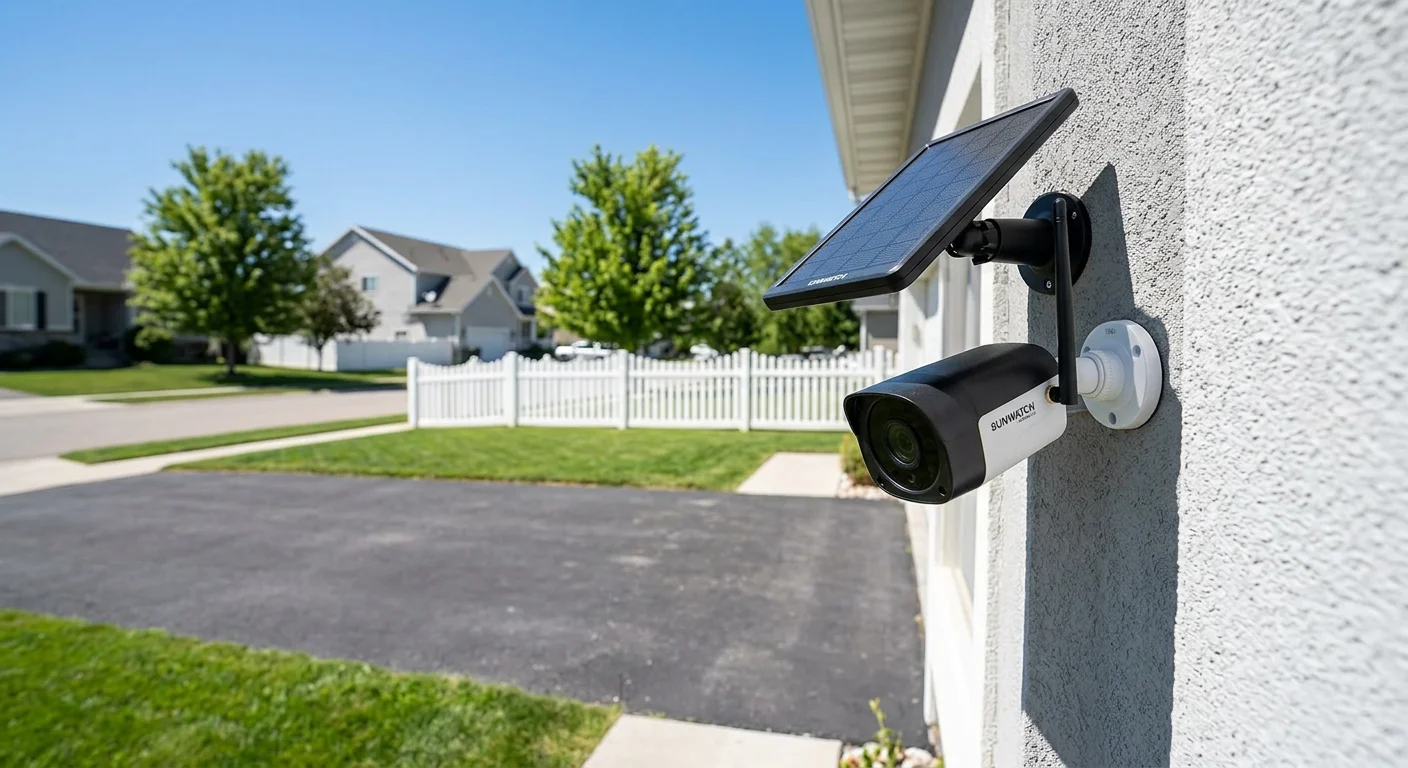
Don’t overthink it. The best solar powered home security cameras are the ones that match your space:
Small home → simple fixed camera
Large yard → PTZ or wide-angle
Off-grid → solar + local storage
Best Overall → Cinnado B6
Reliable, clear, and well-priced for most homes.
Best Premium → Eufy SoloCam S340
Dual-lens 360° coverage with no subscription fees.
Best Budget → TP-Link Tapo C460 / SEHMUA RBX-S73
Affordable, no monthly costs, easy solar setup.
Best PTZ Coverage → MUBVIEW GX8S
Wide-area monitoring with 355° pan control.
Best 4K Performance → Reolink Argus 4 Pro
High clarity, strong AI detection, and a wide field of view.
Bottom Line
In 2026, solar powered home security cameras are a practical, low-cost way to secure most homes — without wiring, installation hassle, or electricity costs.
Just pick one based on your layout and install it. Real-world performance matters more than specs.