Choosing the wrong security camera system doesn’t just waste money — it creates real blind spots in your home’s protection. And you usually don’t notice those gaps until something goes wrong.
A home security camera with NVR solves that problem at the source. Unlike typical WiFi cameras, an NVR security camera system delivers local, reliable, 24/7 recording. It doesn’t depend on your internet staying online or a cloud subscription staying affordable.
In 2026, dozens of NVR security camera systems will flood the market. But the difference between a dependable setup and an overpriced disappointment isn’t obvious from a spec sheet alone.
This guide breaks down the best home security cameras with NVR, comparing real-world video quality, reliability, and installation experience. Use it to make a confident, informed decision before you spend a dime.
Do You Need a Home Security Camera with NVR or a WiFi Camera Instead?
It comes down to one thing: how much downtime you can accept.
WiFi cameras are easy to set up. But they’re also the first to fail when your network isn’t stable. Your router gets congested — the camera drops. Your internet goes down — you lose access to footage.
A home security camera with NVR avoids all of that. An NVR security camera system records footage directly to a local hard drive inside the Network Video Recorder. No internet dependency. No interruptions in recording.
Here’s how an NVR security camera system vs WiFi cameras compares on what actually matters:
Feature | NVR Security Camera System | WiFi Cameras |
|---|---|---|
Reliability | Very high (wired or dedicated signal) | Signal drops are common |
Storage | 2–16TB+ local HDD | MicroSD or paid cloud |
Offline Recording | Full recording + local viewing | Recording only, no alerts |
Long-term Cost | No subscriptions | Cloud fees accumulate |
Installation | Requires cabling (PoE) or setup | Plug-and-play |
Go with a home security camera with NVR if:
You’re covering 4+ cameras across your property
You want 24/7 continuous recording with no monthly fees
Privacy and offline reliability matter to you
Stick with WiFi cameras if:
You only need 1–3 cameras
A cable-free, quick setup is your top priority
Best Home Security Cameras with NVR Systems in 2026 (Quick Picks)
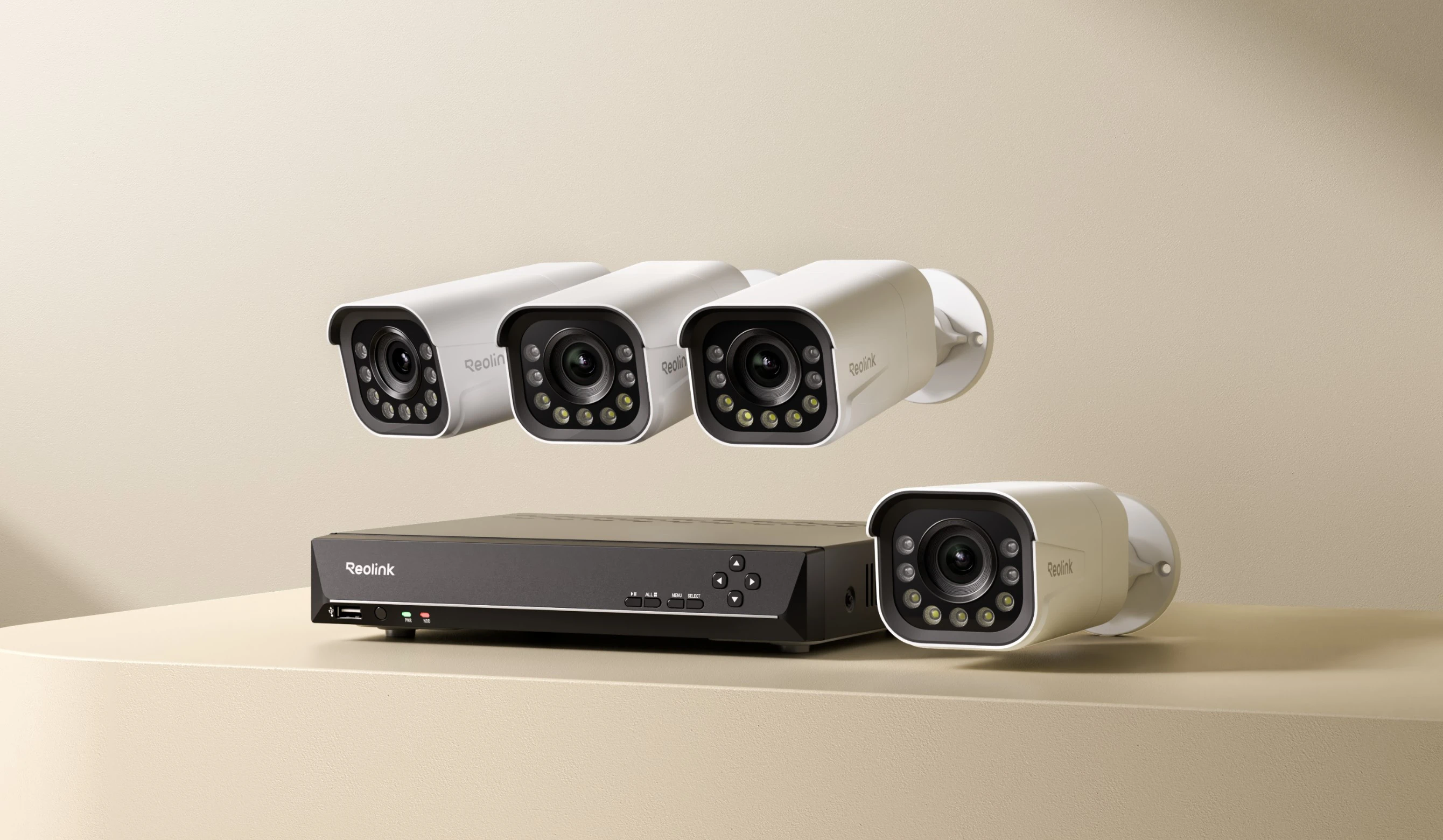
Not every home security camera with NVR is built the same. After real-world testing, these five NVR security camera systems stand out for their reliability, video quality, and long-term value.
Each one earns its place for a specific reason — so you can quickly match the system to your needs.
Best Overall: Reolink RLK8-811B4 — 4K clarity, consistent performance, and a fair price. This is the best home security camera with NVR for most homes. No need to overthink it.
Best AI: eufy PoE NVR S4 Max — Advanced cross-camera tracking, powerful on-device AI, and zero cloud dependency. One of the most intelligent NVR security camera systems available today — with full privacy.
Best Budget: Annke 4K 8CH PoE — A reliable entry-level NVR security camera system for home use under $500. It skips some extras, but the core performance holds up.
Best Wireless NVR: Hiseeu Wireless Pro 16CH — No drilling. No wiring headaches. A true wireless NVR security camera system built for renters and quick setups.
Best for Business: Lorex 4K Fusion — A hybrid NVR system that supports both PoE and analog cameras. Ideal for small businesses that need flexible coverage and active deterrence.
Every home security camera with NVR system on this list stores footage locally. That means:
No monthly subscription fees
Full control over your recordings
Continuous recording — even if your internet goes down
Top 7 Home Security Cameras with NVR Systems (Comparison Table & Real Reviews)
If you’re comparing more than one home security camera with NVR, this is where the differences become clear.
Seven NVR security camera systems made the final cut based on real-world performance, reliability, and long-term value. Here’s how they stack up side by side:
Rank | Model | Type | Price (2026) | AI Features | Storage | Best For | Rating |
|---|---|---|---|---|---|---|---|
1 | Reolink RLK8-811B4 | PoE | $680–800 | Person/Vehicle (local) | 2TB+ | Most homes & driveways | 9.5/10 |
2 | eufy PoE NVR S4 Max | PoE | $1,400–1,500 | Advanced local AI + cross-cam | 2TB–16TB | Large properties, privacy | 9.4/10 |
3 | Lorex 4K Fusion NVR | Hybrid | $500–900 | Smart deterrence | 2–4TB | Mixed home/business | 9.2/10 |
4 | Hiseeu Wireless Pro 16CH | Wireless | $350–460 | Human detection | 1–3TB | Renters, no-drill setups | 8.8/10 |
5 | Swann 8CH PoE NVR | PoE | $400–700 | Heat + spotlight deterrence | 2TB | Small homes & shops | 8.7/10 |
6 | Annke 4K 8CH PoE | PoE | Basic behavior analysis | 2TB | Budget buyers | 8.5/10 | |
7 | Amcrest 8CH PoE NVR | PoE | $330–450 | Motion + optional AI | 2TB | First-time NVR users | 8.3/10 |
Quick NVR System Type Guide
PoE (
Wired NVR security camera
system) — Most stable connection, highest video quality, requires Ethernet cabling
Hybrid NVR system — Combines wired reliability with wireless flexibility
Wireless NVR security camera
system — Cameras connect over a dedicated signal; easiest setup for renters
What Real Users Notice After Installation
Reolink RLK8-811B4 — The 5× optical zoom consistently captures license plates in sharp detail, even at night
Eufy S4 Max — Local AI dramatically reduces false alerts. Everything runs on-device — no cloud dependency
Lorex Fusion — Built-in lights and sirens actively deter intruders, not just record them
Best PoE Home Security Camera with NVR (Deep Dive)
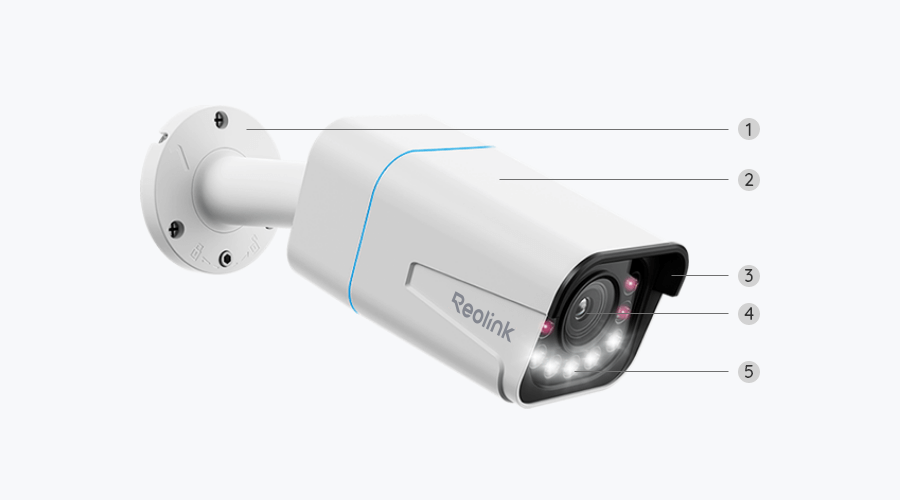
The Reolink RLK8-811B4 earns its top spot as a home security camera with NVR system, the straightforward way — it delivers consistent performance without overcomplicating anything.
At $680–$800, this NVR security camera system comes with 8MP cameras, 5× optical zoom, color night vision, and built-in spotlights. The local AI processing separates people from passing cars in real time. That detail matters more than it sounds — fewer false alerts means you stop ignoring notifications, and when something actually happens, you don’t miss it.
What makes this NVR security camera system work in practice:
Driveway coverage — The 5× optical zoom captures license plates at night, not just in ideal lighting conditions
Perimeter coverage — Designed for full mid-size property coverage with minimal blind spots
2TB HDD included — Expandable local storage with no subscription requirements
PoE connection — One Ethernet cable per camera handles both power and data for stable 24/7 recording
Honest limitation
This is a wired PoE NVR security camera system, which means Ethernet cabling is required. That’s not optional. Installation takes more effort compared to wireless setups, so it’s not ideal if you can’t run cables.
Bottom line
If you want a home security camera with NVR system that prioritizes stability, clarity, and long-term reliability over convenience gimmicks, this is the most balanced option on the list.
Most Advanced AI Home Security Camera with NVR

The eufy S4 Max sits in a completely different category — and the specs make that clear. This is a premium home security camera with NVR system built for users who prioritize intelligence, coverage, and privacy over cost.
This NVR security camera system features triple-lens 16MP PTZ cameras, 8× hybrid zoom, and a dedicated 6T 8-core AI processor that runs entirely on-device. There is no cloud processing, no data upload, and no subscription model. Your footage stays fully local and under your control.
What separates this NVR security camera system from everything else:
Cross-camera tracking — Automatically follows a subject across multiple cameras without manual switching
360° PTZ coverage — Full rotation with color night vision, eliminating blind spots in large areas
Proactive AI detection — The system doesn’t just record events; it identifies and reacts in real time
Local storage up to 16TB — Scales with property size without forcing cloud dependency or recurring costs
Price consideration
At $1,400–$1,500, this is a high-end investment. But for larger properties, the cost is often justified by the risk of coverage gaps — especially in areas where blind spots or delayed alerts can have real consequences.
Best for
Homeowners who want a high-end home security camera with NVR system that delivers advanced AI tracking, full local processing, and zero cloud dependency — even if it comes at a premium price.
Best Hybrid Home Security Camera with NVR

Most home security camera with NVR systems force you into a trade-off: fully wired for stability, or fully wireless for convenience. The Lorex 4K Fusion NVR system removes that limitation by combining both into one setup.
This hybrid NVR security camera system supports up to 8 wired PoE cameras and 8 wireless devices at the same time. That means you can hardwire critical areas like your front door and garage for maximum reliability, while using WiFi cameras for flexible coverage in places like the backyard or driveway — without trenching, conduit work, or hiring an installer.
What you’re working with:
Resolution: 4K and up to 12MP, depending on camera type
Smart deterrence: Built-in lights, sirens, and two-way audio — active deterrence instead of passive recording
Local storage: 2–4TB onboard storage, no subscription required
System type: Hybrid NVR security camera system (PoE + wireless combined)
Price range: $500–$900
Why the deterrence system matters
The deterrence features on this NVR security camera system go beyond recording. Users consistently report that flashing lights and audible sirens help stop incidents before they escalate — turning the system from a passive recorder into an active security layer.
Best for
Homeowners who want a flexible home security camera with NVR system that combines wired stability for critical zones with wireless expansion for convenience, without needing to rebuild their setup later.
Best Wireless Home Security Camera with NVR Setup

Not every home security camera with NVR system is built for permanent installation. The Hiseeu Wireless Pro 16CH NVR kit is designed for users who want full coverage without drilling, wiring, or committing to a fixed setup.
This wireless NVR security camera system offers a true plug-and-play experience. Each camera connects to a standard power outlet and transmits footage to the NVR over a dedicated WiFi signal. No Ethernet cables, no wall drilling, and no landlord restrictions — just mount, plug in, and start recording.
What you’re getting:
16-channel capacity — far more coverage than most residential homes will ever need
Up to 100ft wireless range — uses a dedicated WiFi-Pro signal instead of your home router to reduce congestion
AI human detection — filters out false alerts triggered by trees, headlights, animals, and environmental motion
1–3TB local storage — keeps footage stored locally with no cloud subscription required
Price range: $350–$460
Trade-offs you should understand
This wireless NVR security camera system prioritizes installation convenience over maximum connection stability. While the dedicated wireless link is reliable for most homes, it still doesn’t match the absolute consistency of a wired PoE NVR system.
However, for renters or users who cannot run cables, this trade-off is often acceptable — you still get continuous local recording and full-property coverage without permanent installation.
Best for
Renters, apartment dwellers, and anyone looking for a no-drill home security camera with NVR system that can be installed in minutes and removed just as easily when needed.
PoE vs Wireless vs Hybrid Home Security Camera with NVR Systems
Three connection types. One real decision.
Your connection method shapes everything about a home security camera with NVR system — including stability, installation complexity, and overall coverage flexibility.
Understanding the difference between PoE, Wireless, and Hybrid NVR security camera systems is often the key factor in choosing the right setup.
NVR Security Camera System Comparison
Factor | PoE (Wired) | Wireless NVR | Hybrid |
|---|---|---|---|
Stability | Highest | Good (dedicated signal) | Best of both |
Installation | Moderate (requires cabling) | Easiest | Flexible |
Video Quality | Best (no compression loss) | Very good | Excellent |
Range | 300ft+ per cable | ~100ft | Extended coverage |
Best for | Permanent homes | Renters | Mixed needs |
PoE (Wired NVR security camera system)
PoE systems transmit power and data through a single Ethernet cable. This creates a highly stable wired home security camera with NVR setup with no wireless interference, no signal drops, and maximum video consistency.
Wireless NVR security camera system
Wireless NVR systems use a dedicated signal between cameras and the recorder. This keeps your home network separate, reducing router congestion and simplifying installation. It’s ideal when running cables is not an option.
Hybrid NVR system
Hybrid systems combine both approaches. You can hardwire critical areas like entrances and garages while using wireless cameras for flexible coverage elsewhere. This creates a balanced home security camera with NVR system that adapts to different property layouts.
Bottom line
Choose based on your environment, not your preferences.
Your walls, layout, and installation limits matter more than specs on paper.
What to Look for in a Home Security Camera with NVR (2026 Buyer’s Guide)
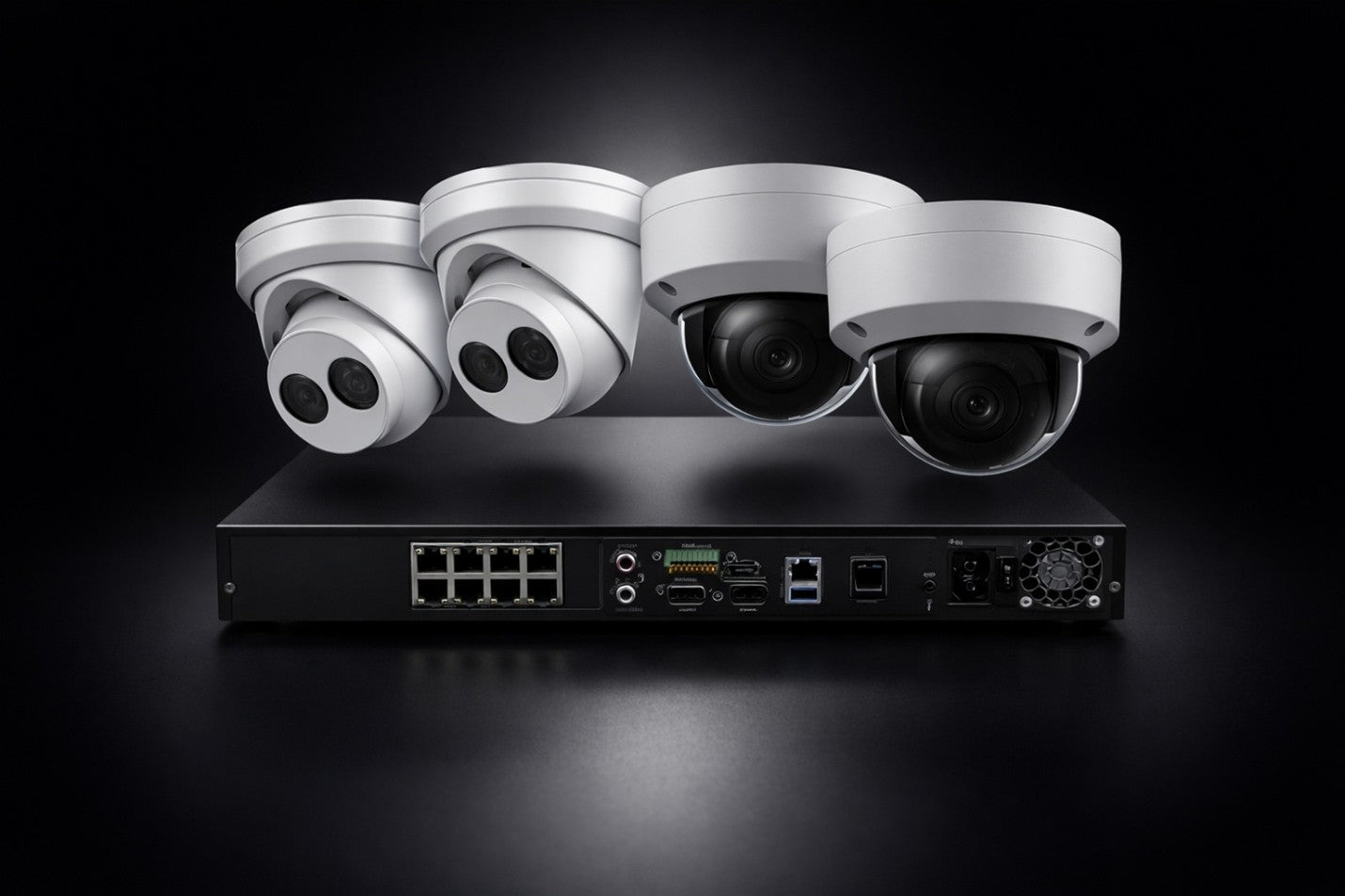
Spec sheets are designed to impress, not to help you decide. When choosing a home security camera with NVR system, what actually matters is how the system performs in real-world conditions — not how it looks on paper.
Below are the core factors that separate a reliable NVR security camera system from one that becomes frustrating or outdated within a year.
Resolution (4K is the baseline)
4K (8MP) is now the minimum standard for any serious home security camera with NVR setup. Lower resolutions often struggle to capture faces or license plates clearly — the exact details you depend on during an incident.
Storage (start at 2TB)
A minimum of 2 TB of local storage is recommended for most NVR security camera systems. Motion-based recording can extend retention time, but storage needs scale quickly as you add more cameras. Always plan based on future expansion, not just your current setup.
AI processing (local vs cloud)
Choose systems with local AI processing, not cloud-based analysis. On-device AI reduces false alerts at the source and keeps all footage within your own system. Cloud-dependent AI, by contrast, requires sending footage off-site, which introduces privacy and dependency concerns.
Channel capacity (8CH or 16CH)
Always look for at least 8-channel or 16-channel support in a home security camera with NVR system. Security needs tend to grow over time, and limited channel capacity often forces unnecessary system replacement later.
No subscriptions (true NVR advantage)
One of the biggest advantages of an NVR security camera system is eliminating recurring fees. Local storage ensures full ownership of your footage, with no monthly cloud subscription required.
Bottom line
Focus on these five fundamentals:
Resolution
Storage
AI processing
Channel capacity
Subscription model
Everything else is secondary noise.
Resolution in Home Security Camera with NVR Systems: Why 4K Is the New Standard
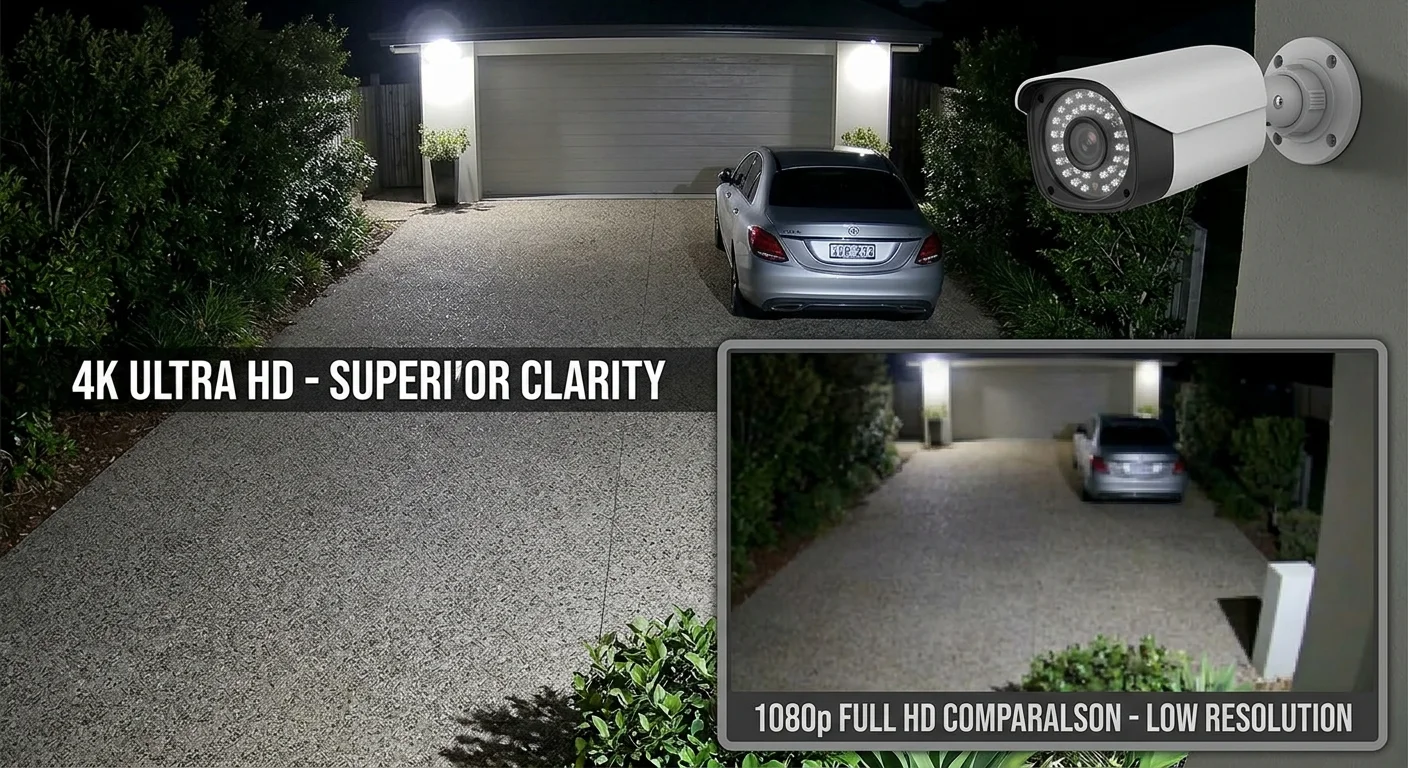
1080p had a long run — but in modern home security camera with NVR systems, it’s no longer enough.
Think about real-world distances: across a driveway, down a hallway, or near a front gate. At those ranges, 1080p quickly breaks down. Faces turn into blur, and license plates become guesswork. In a real incident, that’s the exact footage you can’t afford to lose.
Why 4K is now the standard for NVR security camera systems
4K (8MP) changes what you actually get from a home security camera with NVR setup:
Clear facial recognition at a distance
Readable license plates in low-light conditions
More usable detail for playback and evidence review
Every serious NVR security camera system released in 2026 now pairs 4K cameras with a properly matched NVR. This pairing matters more than most buyers realize.
Why system matching matters
A home security camera with NVR system is only as strong as its weakest component. If the cameras and NVR aren’t properly matched for resolution and processing, you lose detail before it’s even stored on the hard drive.
That lost detail is not recoverable later — no software or upgrade can restore it.
Bottom line
If you’re investing in a modern NVR security camera system, 4K is no longer a premium feature — it’s the baseline.
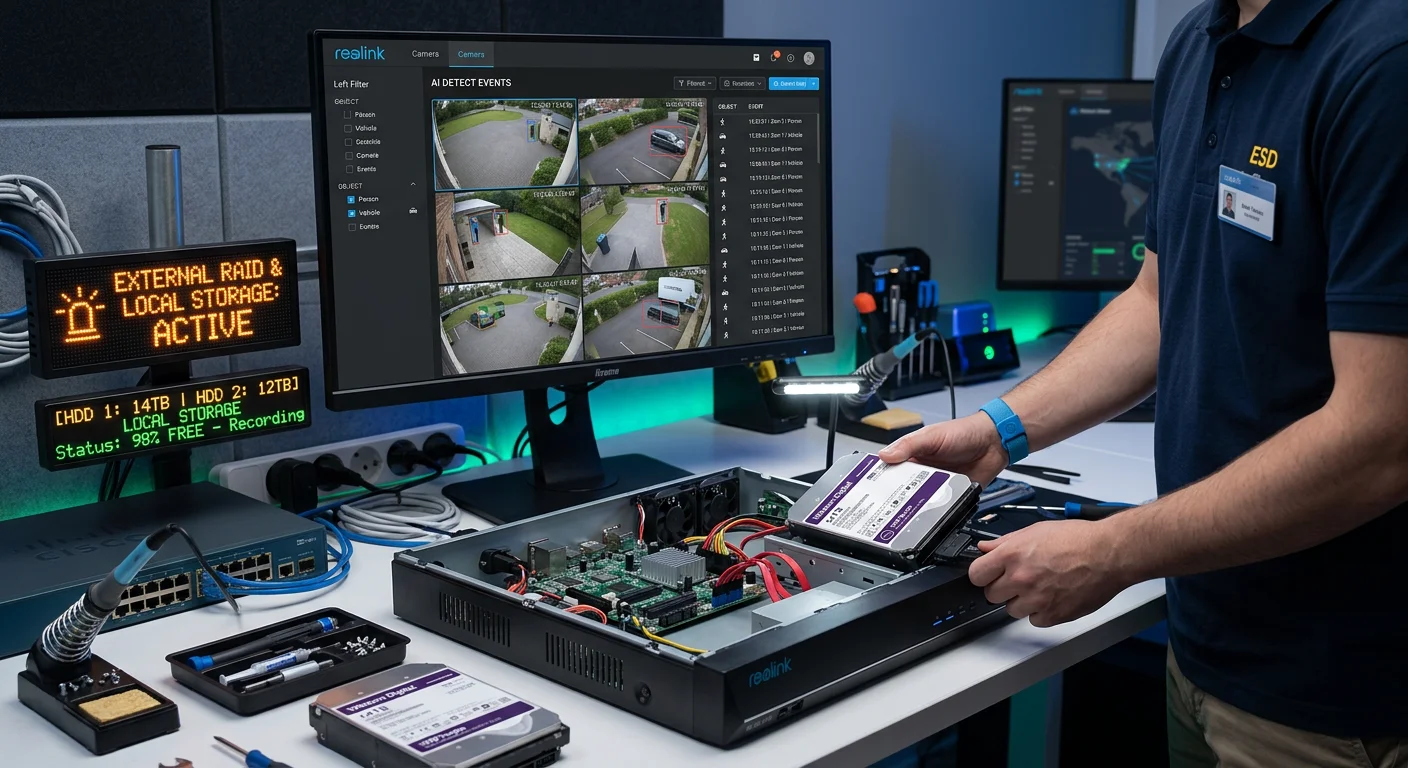
Expandability in NVR Security Camera Systems: Planning for Future Growth
Start with 8 channels, even if you only need 4 right now.
Security needs rarely stay the same. A new garage, a side gate, or a blind spot you didn’t notice until winter — these are exactly the kinds of changes a home security camera with NVR system should be able to handle without forcing a full replacement.
A scalable NVR security camera system lets you expand over time instead of starting over. That means no redoing wiring, no replacing your recorder, and no rebuilding your entire setup just because your coverage needs have changed.
How expansion actually works
Most NVR systems are designed to grow in two main ways:
Open PoE ports — Add new cameras directly into unused channels on your NVR
PoE switch expansion — Increase camera capacity without replacing the recorder
This flexibility is one of the biggest long-term advantages of a home security camera with NVR setup, especially compared to fixed-capacity systems or cloud-only cameras.
Why expandability matters
A non-expandable system often becomes outdated not because of technology, but because of real-life changes. Once you run out of capacity, you’re forced to replace the entire system — not just add to it.
With a properly designed NVR security camera system, you avoid that problem entirely.
Bottom line
The best approach is simple: don’t just buy for your current layout — buy for where your property is likely to grow.
Best Home Security Camera with NVR for Different Use Cases
Not every home has the same security needs. The right home security camera with NVR system should match how you live, not just what looks best on a spec sheet.
NVR Security Camera System Recommendations by Use Case
Situation | Best Pick | Why It Fits |
|---|---|---|
Apartments / Renters | Hiseeu Wireless Pro 16CH | No drilling, plug-in cameras, portable wireless NVR system |
Houses / Homeowners | Reolink RLK8-811B4 or Lorex Fusion | Full PoE perimeter coverage with room for expansion |
Small Business / Warehouses | Lorex Fusion or eufy S4 Max | 8–16 channel capacity, local AI processing, active deterrence |
Privacy-focused users | eufy S4 Max | 100% on-device AI, zero cloud dependency |
Why matching the system matters
Different users need different types of NVR security camera systems. A renter prioritizes installation flexibility, while a homeowner often needs stable PoE coverage. Business environments require scalability and stronger AI monitoring, and privacy-focused users prioritize local processing without cloud exposure.
Bottom line
Renters benefit from plug-and-play wireless systems with no installation barriers. Homeowners get long-term PoE reliability with expansion options. Business users need scalable systems with stronger AI, and privacy-focused users should prioritize fully local processing.
The best home security camera with NVR system is not the most powerful one — it’s the one that fits your environment.
FAQ About Home Security Camera with NVR Systems
Three questions come up again and again when people compare home security camera with NVR systems. Here are clear, no-fluff answers.
Do I need internet for my NVR system to work?
No — and that’s exactly the advantage of an NVR security camera system.
Your cameras continue recording directly to the local hard drive inside the NVR, whether your internet is on or off. The system does not depend on cloud access or external servers.
Internet is only needed for remote viewing (for example, checking live footage from your phone when you’re away from home).
How long will 2TB of storage last?
With a typical home security camera with NVR setup using 4 cameras on motion-based recording, 2TB of storage usually lasts around 2–4 weeks.
However, retention time depends heavily on your configuration:
More cameras reduce storage duration
Continuous recording uses storage much faster than motion-based recording
Higher resolution (4K) also increases storage usage
If you need longer retention or plan to expand, upgrading to 4TB or higher is often the more future-proof choice.
Can I mix cameras from different brands?
Yes — but only if both the camera and the NVR support the ONVIF standard.
Most modern NVR security camera systems support ONVIF, which allows cross-brand compatibility. However, mismatched systems without ONVIF support will not communicate properly.
Always verify compatibility before purchasing to avoid integration issues later.
The right home security camera with NVR system comes down to two factors: your wiring tolerance and your property size.
For most homes, the Reolink RLK8-811B4 offers the best balance of reliability, clarity, and value. For large properties or maximum privacy, the eufy S4 Max delivers the strongest local AI and fully offline operation. Renters will benefit most from the Hiseeu Wireless Pro’s no-drill setup, while Lorex Fusion is ideal for users who need both wired stability and wireless flexibility.
Ultimately, all of these NVR security camera systems share the same core advantage: local recording with no monthly subscriptions, no cloud dependency, and full control over your footage. The best choice isn’t the most powerful system — it’s the one that fits your home today and can grow with it tomorrow.